
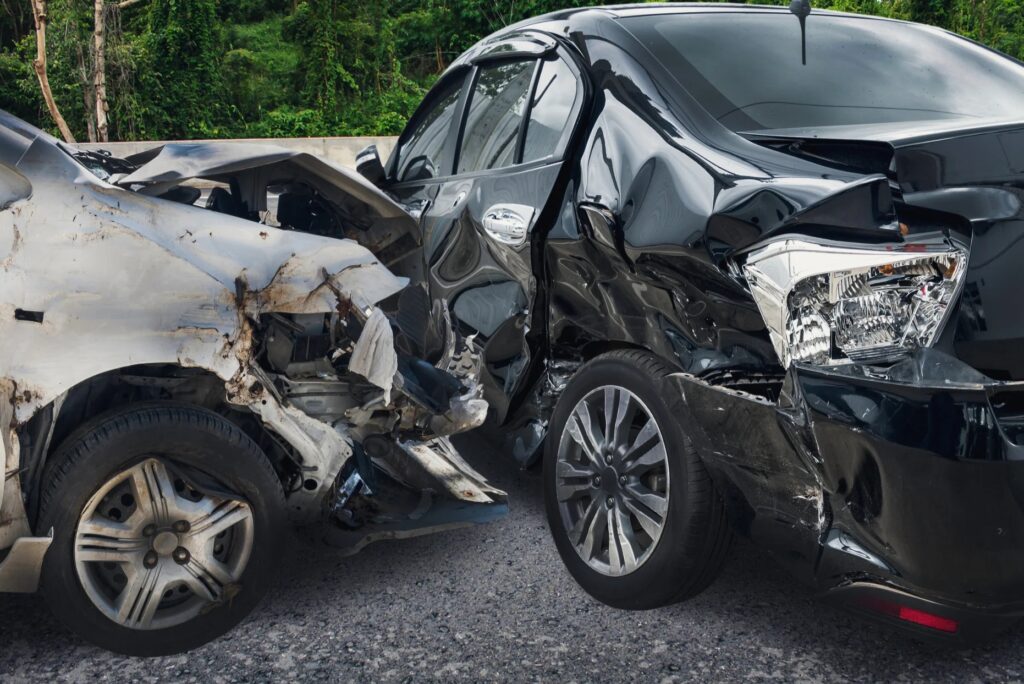
Annually, over 1.25 million persons, mostly men, are killed on the global road network. This profound loss of valuable human capital could be used to develop the global economy. It is critical, therefore, that nations across the world put systems in place to ensure these numbers are dramatically reduced. Interestingly, many countries have signed the United Nations Road Safety Resolution A/RES/74/299, committing themselves to reducing road deaths by 50% by 2030. To achieve this noble vision, it is imperative that requisite measures be put in place to give it a fighting chance.
FIVE ESSENTIAL PILLARS
It should be noted that preventing traffic injuries and deaths is an arduous task, as the road/traffic ecosystem is multifaceted and multidisciplinary, requiring the contribution of a large number of stakeholders. The implementation of five crucial pillars is essential: road safety management, safe road users, safe roads and roadsides, safe vehicles, and post-crash care. If these pillars are not strengthened, it will be extremely difficult for the globe to reduce road deaths by 50% come 2030.
As posited by Prince Otto Von Bismark at the end of the Franco-Prussian War in 1871, “The great events of the day are not settled by big speeches and conferences, but by blood and iron,” meaning it is action, not words, that brings results. Nations must tackle road safety as seriously as crime and violence.
To achieve the 50% target, there must be a concerted effort to ensure that proper road safety foundations, cornerstones, boundaries, and pillars are built and periodically assessed for breaches and fortification.
Developed countries, especially in Europe, have been able to sustainably reduce deaths because they avoid cherry-picking and ensure that the entire road safety ecosystem is addressed. Nations like Sweden, the United Kingdom, and the Netherlands have achieved fatality rates to the envy of most, but this was not achieved overnight. Their fatality rates of below 5 per 100,000 were as a result of over 30 years of focused road safety work in some instances.
Developing countries must therefore acknowledge that there is no overnight panacea, especially in light of the fact that their road safety institutions are weak or non-existent.
Developing countries, like Jamaica, need to appreciate the idiom “Rome was not built in a day” and be systematic and committed to building their road safety institutions and give themselves realistic timelines.
CAN ISSUING TRAFFIC TICKETS REALLY REDUCE ROAD DEATHS?
Road safety literacy is extremely important, and there ought to be a strong thrust by developing countries to ensure that their citizens are informed and sensitised, especially in this era of smarter motor vehicles. Traditionally, focus is given to the role of law enforcement in reducing road deaths at the expense of other components of the road safety ecosystem, but this is not sustainable. While the focus is on law enforcement, notably, there is no statistical relationship with traffic tickets issued and road deaths.
Consequently, more emphasis should be given to ensuring that road users are road-safety literate through campaigns and outreach, especially in targeting vulnerable road users like pedestrians and motorcyclists who account for over 50% of road deaths in some countries. Road safety education in developing countries is very weak, as some nations do not value its importance and, for the most part, are expecting overnight success without planting the proper seed in the ground. Forgoing the sustainable approach of prioritising road safety education has serious consequences, as males are the predominant victims, which has a deleterious effect on the family structure of nations, resulting in children growing up without their fathers.
POST-CRASH CARE
The United Nations Decade of Action for Road Safety recognises the importance of the post-crash care pillar, as oftentimes many persons could have survived the crash only if their nations had an emergency response system.
Functional emergency response systems give traffic crash victims a fighting chance of surviving the collision or minimise the severity of the injuries. Strict policies must be developed to ensure that the “Golden Hour”, which is immediately after the crash, is treated with utmost care as this is a crucial time for victims to receive critical medical attention.
Developing countries must make significant investment towards strengthening their weak health systems, as an essential component of the road safety ecosystem.
So, do I believe that the United Nations Road Safety Resolution A/RES/74/299 to reduce road deaths globally by 50% by 2030 is really achievable through human effort? I do not think we can sustain any achievements made, for “Except the Lord build the house, they labour in vain that build it: except the Lord keep the city, the watchman waketh but in vain.” Psalm 127:1
Without the proper road safety foundations, inspired by YHWH, it will only be a pipe dream to half road deaths globally by 2030.
Kenute Hare has been a born-again Believer for over 30 years and describes himself as an “unrepentant road and vehicular safety zealot.” He is the former head of the GOJ’s Road Safety Unit and Island Traffic Authority, and now operates as a CEO in the private sector.