Shavuot (שָׁבוּעוֹת in Hebrew, also pronounced Shavuos) is a two-day Jewish holiday that commemorates the date when God gave the Torah to the Jewish people at Mount Sinai over 3,000 years ago. The biblical reference to the giving of the Torah is found in Exodus 20.
In Exodus 19:1-11, we’re told of the preparatory requirement of God. By now, it was the third month that the children of Israel had been in the wilderness of Sinai, having been delivered from the captivity of Egypt. In obedience to God’s call, Moses summoned the elders and people to gather – he was told to sanctify them, instruct them to wash their clothes on the following day, and be ready on the third day for the Lord to come down in the sight of all the people on Mount Sinai.
LIGHTNING SHOW AND HEAVENLY ORCHESTRA
On the third day in the morning, as the people gathered, there were lightnings and thunders, and a thick cloud was upon the mount, and the voice of the trumpet was exceedingly loud, so much so that the people trembled. Mount Sinai was covered in smoke because the Lord descended on it in fire, and the whole mount quaked.
Moses spoke to God, who told him to ensure that a boundary be set about the mount so that the people would not try to break forth to come up to the Lord. (Exodus 19: 16-21) When Moses delivered God’s instructions, he left the people to go receive the Torah from the LORD.
After God completed the declaration of the Decalogue (the 10 Commandments), the “lightning show” and “heavenly orchestra” made their appearance once again, with the people begging Moses to transmit what God had said, for they feared that if God spoke to them directly, they would die. Moses then delivered God’s instructions regarding the making of other gods (there should be none), and the building of altars for use by the children of Israel to offer sacrifices unto God. (Exodus 20:18-25)
WAITING IN PRAYER
Fast forward, nearly 3,500 years later, Jesus, the Son of God, ascended to the Father. He was sent by God to be the propitiation for sin so that those who believed in Him would be restored to a right relationship with the Father.
The ascension of Christ took place forty days after His resurrection from the dead, during which time He interacted with approximately 500 people (1 Corinthians 15:6). When he was about to return to the Father, He told his disciples to wait for the power of the Holy Ghost to come upon them so that they would be His witnesses throughout the world…Jerusalem, Judea, Samaria and unto the uttermost part of the earth.
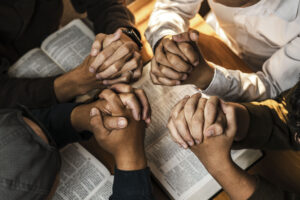
The 12 disciples, women, and other brethren, who numbered one hundred and twenty (Acts 1:15), waited in the upper room and continued with one accord in prayer and supplication. During this time, they also selected the disciple to replace Judas Iscariot, the one who had betrayed Jesus and subsequently took his life in remorse.
The scripture says, “…when the day of Pentecost was fully come, they were all with one accord in one place.” This “day of Pentecost” was the second of the three great Jewish pilgrimage feasts, celebrated in Jerusalem yearly, taking place seven weeks after Passover, in grateful recognition of the completed harvest.
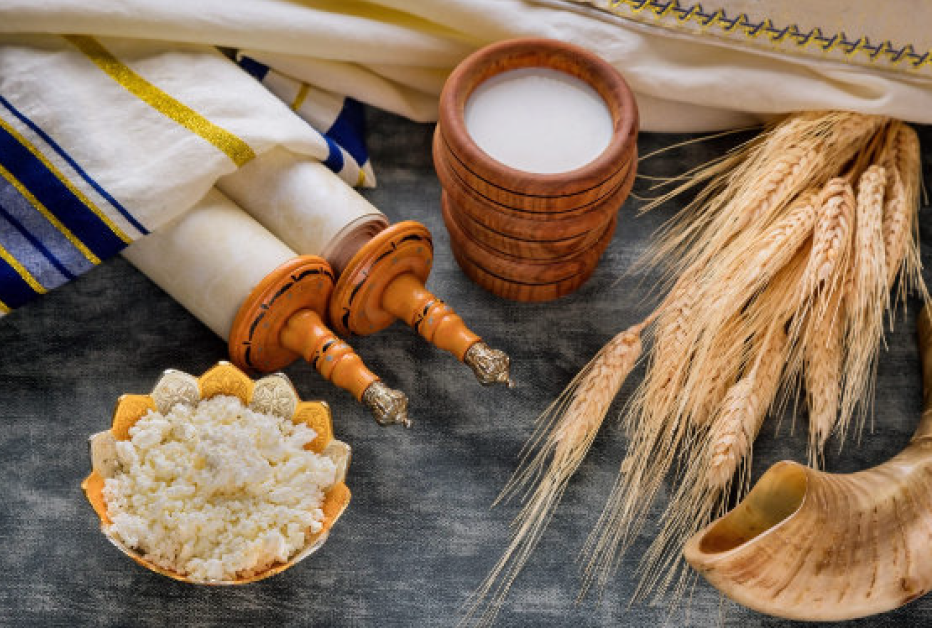
The harvest celebration, also known as First Fruits, commemorated the entry into the land that God would give them, marked by bringing in a sheaf of the first portion of their harvest unto the priest, which he would wave before the Lord. (Leviticus 23:10-11). Wheat, barley, and other grains were generally included as a part of the sheaf of the wave offering. The instruction was then given to count down seven weeks after the wave offering, and on the day after that, which would be the fiftieth day, present a new meat offering unto the Lord. This day became the marker for Shavuot, also known as the Feast of Weeks.
Leviticus 23:15-16 details the instruction regarding how the seven weeks came about. “And ye shall count unto you from the morrow after the sabbath, from the day that ye brought the sheaf of the wave offering; seven sabbaths shall be complete: Even unto the morrow after the seventh sabbath shall ye number fifty days; and ye shall offer a new meat offering unto the Lord.”
WIND, FIRE, AND CONFUSION
At the time that the 120 were gathered in the upper room, preparations for the pilgrimage feast of Shavuot with Jews from all nations assembled in Jerusalem would probably have been in high gear. As the promised Holy Ghost was being poured out on the 120, He came in the visible manifestation from heaven as “a sound of a rushing mighty wind” filling the house where they were gathered and in “cloven tongues like as of fire”, which sat upon each of them, causing them to speak in other tongues. This enabled the multitude from the other lands to hear the disciples and others speaking in their own languages, to their consternation and possible confusion.
While not as dramatic as the occasion of the giving of the Torah on Mount Sinai, there was another manifestation of the heavenlies, employing the earth elements to show the power of God at work yet again. This time the onlookers were not gripped in fear but were clearly amazed, one may even say perplexed, by the events unfolding before their eyes. Followers of Jesus have dubbed this occasion as the “birth of the Christian church.”
MOEDIM VS MAN-MADE
When we follow the Biblical calendar, using Passover (Pesach) as the reference point, Pentecost will come 50 days after the waving of the sheaf, the harvest festival of firstfruits. Since the modern-day church begins the countdown to Pentecost from the resurrection of Christ on the third day after his death and burial, we will find that the two Pentecost celebrations usually have differing dates. This year, if we are honouring the Biblical moedim (feast days), Pentecost (Shavuot) will start the evening of Sunday, June 1, 2025, or Sivan 5, 5785, with the fulsome day of celebration being Monday, June 2, 2025, or Sivan 6, 5785.
Those who follow the Gregorian calendar will celebrate Pentecost on Sunday, June 8, 2025, one week later. God’s appointed feast days or mankind’s “made-up” days … which will you decide to follow?