…but whosoever will be great among you, shall be your minister: And whosoever of you will be the chiefest, shall be servant of all. Mark 10: 43b-44.
Citizens of Jamaica who are age 18 and older enjoy the privilege in selecting the leaders of the country. The term that is used for this is ‘Universal Suffrage’ or ‘Adult Suffrage’ (also called Universal Franchise, General Suffrage, and Common Suffrage of the Common Man) and it gives the right to vote to all adult citizens, regardless of wealth, income, gender, social status, race, ethnicity, or any other restriction, subject only to relatively minor exceptions (Wikipedia).
The process of electing leaders is guided by the principle that Jethro gave to Moses in Exodus 18: 20-22. That account outlines the selection of a leader who will then place men, “…to be rulers of thousands, and rulers of hundreds, and rulers of fifties, and rulers of tens…” (Exodus 18:21). It was God who appointed Moses who chose the leaders, and we now have the honour of participating in the selection process.
We often think that it is only Jamaica’s electoral process that has been fraught with challenges, such as ballot box tampering, but there are other nations where there is a fight for transparent, democratic voting procedures. This can be seen in ‘anocracies’ – governments which act more authoritarian than democratic or simply put, governments that are ‘part democracy, part dictatorship’ (Cambodia, Congo, Egypt, Libya, Somalia, Sudan). Surprisingly, there are also nations which have only recently included women in their electoral process, e.g. Saudi Arabia in 2015.
Initially, in many instances, Suffrage granted only men voting rights. However, in 1944, for the first time in Jamaica’s history, the Jamaican Constitution extended the voting franchise to all adults (at least 21 years old at that time), with no restriction based upon gender, income, property, race or literacy. The previous Electoral Law of 1884 was repealed and replaced by the Representation of the People Act (ROPA) Law 44 of 1944.
SOME TERMS WE NEED TO KNOW
The Electoral Commission of Jamaica (ECJ) has informed that 24,461 new names have been added to the national voters list that was published on May 31, 2025. This brings the total number of registered voters to 2,077,799.
If you are one of the 24,461 new persons, here are some voting terminologies you need to be aware of:
Polling stations – the various places within a polling division for electors to cast their votes during an election. Every polling station should be open from 7:00 a.m. to 5:00 p.m. on Election Day for the general populace. Some stations may be located in schools, church halls, community centres, etcetera.
Ballot papers – these are the official papers bearing the names and symbols of all candidates contesting the election within each division or constituency and are made available for electors (voters). The voter indicates his or her selection by placing a cross ‘x’ beside the candidate of choice.
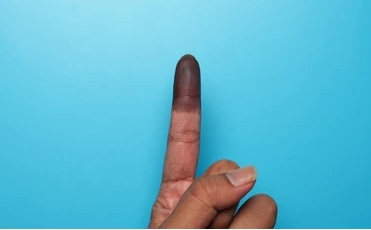
Electors (voters) – any person whose name is on the official List of Electors who shall be permitted to vote at the polling station where their name appears on said list. Having established the right to vote in a particular polling station, on election day, the elector (voter) is supplied with a ballot paper and instructed on how to mark on it and return it, folded, so as to maintain secrecy. Once the elector has completed this process, he or she will have the right index finger stained with electoral ink. The ballot is then dropped into the ballot box in their presence, after which they depart the polling station and its general location.
As an election day supervisor for many years now, my aim is to ensure that all voters feel comfortable with the process by September 3, the date of the next General Election in Jamaica, to the extent that a larger percentage will go out and get their fingers inked; a larger number will exercise their right to cast their vote!