Jamaica misses automatic World Cup spot
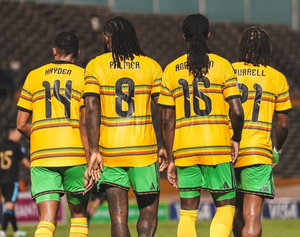
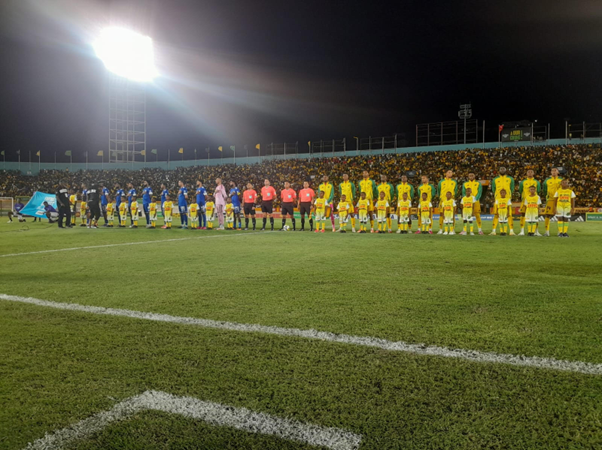
The relief that usually follows a full-stadium roar never came. Instead, a heavy hush settled over the National Stadium on Tuesday night as the Reggae Boyz were held to a goalless draw by Curaçao, a result that left Jamaica outside the automatic places for the 2026 FIFA World Cup and in the uncertainty of the inter-confederation play-offs next March. The draw, and the narrow margins that decided it, felt especially cruel against the backdrop of a nation still reeling from Hurricane Melissa’s devastation.
Curaçao’s quiet night in Kingston was enough to seal the top spot in Group B. Jamaica pushed, created moments, and thought they had been awarded a late penalty only for VAR to overturn the decision, but they could not find the finish needed to leapfrog the visitors. The 0–0 scoreline left the Boyz second in the group and forced a different, tougher route to North America next year.
It didn’t just stop there, as a few minutes after the last whistle, the coaching chapter of the national team changed. As the nation processed the defeat and its implications for the team’s short-term future, head coach Steve McClaren officially announced his resignation during the post-match press conference. As Jamaica gets ready for the crucial play-off mini-tournament that will decide the final two World Cup spots, it is now impossible to avoid the search for a new manager and, with it, a new strategy.
A route that still exists but narrower
Despite the disappointment, all is not yet lost. FIFA’s inter-confederation play-off tournament, a six-team, neutral-venue mini-competition in March 2026 will hand the last two World Cup berths. Two CONCACAF sides, one representative each from AFC, CAF, CONMEBOL, and OFC will contest the slots in single-leg knockout ties in Mexico during the international window at the end of March. For Jamaica, that means qualification is reduced to winning one or two sudden-death matches away from the roar of a World Cup crowd. It is a slimmer path, but it is a path nonetheless.
The play-off format is brutal in its simplicity: win, or go home. The draw for the play-offs will seed teams and place the two CONCACAF entrants in separate paths, meaning the Boyz could face a diverse set of opponents. The dates penciled in by FIFA place semi-finals on March 26, 2026, and finals five days later.
Echoes of 1997
There is history in Kingston for nights like this. Jamaica’s most electric memory on these turf lines dates to November 16, 1997, when the René Simões’ side sealed the country’s first-ever World Cup berth with a nerve-shredding 0–0 draw against Mexico at the same National Stadium. That result sent euphoria rippling across the island, a moment that transformed football’s place in the national imagination and remains the high-water mark of Reggae Boyz folklore. Tuesday’s result could not have felt further from that celebration: where 1997 brought liberation, 2025 has delivered the work of rebuilding not only infrastructure but also confidence, and now coaching leadership.
The contrasts are stark: in 1997, a team under a charismatic foreign coach captured the country’s first World Cup ticket and united a jubilant nation; in 2025, a team with more experience and wider diaspora connections finds itself in the awkward position of re-grouping after a tournament campaign that fell short when it mattered most. The mantle of expectation, and the memory of that November night in ’97, will make the coming months all the more intense.
Beyond the technical and tactical debate that will now dominate selection rooms and talk-back radio, the wider context cannot be ignored. Hurricane Melissa’s damage across Jamaica has been severe, with economic and social recovery still in its early stages, meaning the national mood is a complicated mixture of grief, resilience, and, for many, a need for hope. The football federation must now balance the immediate requirement to appoint a coach who can navigate the pressure-cooker of March’s play-offs with the longer task of supporting a country still digging out from the hurricane’s aftermath.
Steve McClaren leaves behind mixed verdicts: a coach who steadied parts of the campaign but who ultimately could not close the deal. The JFF’s next appointment will be judged not only by results but by how quickly and effectively this new coach can galvanize a squad that still contains talented players capable of matching up against the world’s best.
The last word: hope in a tightrope
If there is a silver lining, it is simple and unforgiving: Jamaica’s World Cup destiny is still mathematically alive. The inter-confederation play-offs hands the Boyz two sudden-death opportunities in March to book a historic return to football’s biggest stage. It will be a short, brutal sprint: one wrong pass, one missed chance, and the dream ends. The memory of November 16, 1997, a goalless draw that sparked euphoria, is proof that Kingston has seen joy after tension before. For now, disappointment looms, but possibility hangs in the balance. If the Boyz can regroup, appoint the right leader, and find goals in March, the story of 2026 could yet bend toward redemption.