Although Deaf Awareness Month was observed in September, the need to reach the Jamaican Deaf Community extends far beyond one month. It is about ensuring that deaf and hard-of-hearing individuals have equal opportunities to understand God’s Word, grow spiritually, and develop a personal relationship with Jesus Christ.
Across Jamaica, deaf and hard-of-hearing individuals of all ages face communication barriers that can limit their access to information, services, and Christian ministry. A few months before Hurricane Melissa, the Lord placed on my heart the need to write about evangelising to the deaf in Jamaica and the importance of making the Gospel accessible to them.
When church groups visit communities to share the Gospel, deaf individuals may be overlooked, excluded, or not fully included because persons who are sent out to communities lack the sign language skills needed to communicate effectively with them.
Sharing the Gospel should involve more than delivering a message; it should also ensure that deaf people can understand it. Churches should therefore become intentional about reaching deaf individuals through sign language, accessible biblical teaching, and inclusive outreach.
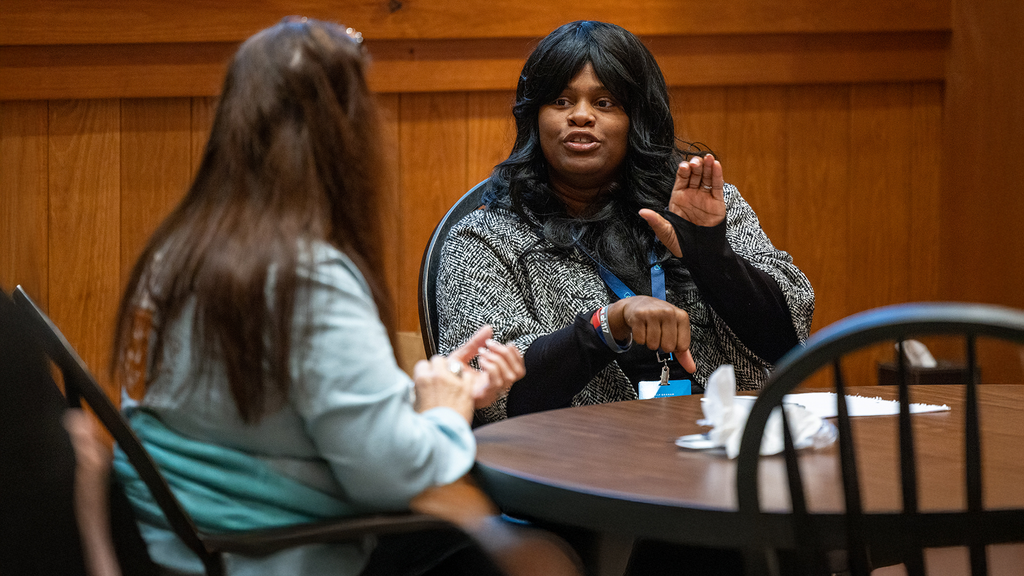
My concern became even clearer after visiting three churches in Jamaica, particularly in the Kingston area, that have sign language ministries or provide some form of sign language interpretation. Although someone was signing the sermons, I noticed errors and incorrect signs being used for certain words or phrases. On these visits, I realised that I was not receiving the full message being preached.
On more than one occasion, a friend invited me to her church and arranged for a member who knew some signs to assist with interpreting the service. I was excited to attend, but the experience raised further concerns. I recall a conversation in which a church member asked the person signing whether she was able to manage the interpretation of the sermon. She responded that she did not worry about everything being said, but simply picked out the important points and signed those to the deaf person.
This did not sit well with me, as I believe deaf individuals deserve access to the full message rather than selected points. While I recognise that interpreting a sermon requires skill and preparation, churches should ensure that those providing this service are adequately trained or work alongside qualified sign language interpreters.
The presence of a signer does not automatically guarantee meaningful access to the Word of God. Accurate interpretation and clear explanations are essential for deaf individuals to understand biblical teachings, sermons and grow in their faith.
Although some deaf individuals know about Christ, they may not fully understand salvation, foundational biblical teachings, or what it means to develop a personal relationship with Him. For many deaf people, English is a second language, and certain biblical concepts may be difficult to understand without clear explanations in a language they can fully comprehend.
This highlights the need for more evangelists to seek the Holy Spirit’s guidance and take intentional steps to learn sign language or Jamaican Sign Language (JSL). Evangelism should not be limited to speaking or distributing literature; it should involve communicating the Gospel in ways that deaf individuals can understand, ask questions about, and apply to their lives.
Churches can begin by providing deaf awareness training, introducing basic JSL to their outreach teams, and partnering with deaf Christians and qualified interpreters to develop more accessible evangelism programmes.
The need for accessibility extends beyond church services to Christian media, online platforms, and community outreach. Tarrant Baptist Church (TBC), through its radio station and YouTube channel, shares teachings and discussions that can contribute to spiritual growth and awareness of issues affecting Jamaica, many deaf individuals are not fully benefitting from the information being shared.
For example, information about Jamaica’s National Identification System (NIDS) can help people explore different perspectives and make informed decisions. Deaf individuals should have equal access to such information so that they can consider relevant information, ask questions, and form their own views. Deaf people may receive only one part of the information from the secular worldview and not from what TBC has to share based on the Believers view.
It would be encouraging to see TBC take practical steps to partnerships with deaf individuals and professionals who understand their communication needs.
There are two well-known religious organisations in Jamaica that have made deliberate efforts to reach deaf individuals by learning sign language, developing resources, conducting door-to-door outreach, and engaging deaf people in their communities. Their representatives seek opportunities to interact with deaf individuals, introduce their beliefs, and invite them to their places of worship.
Although Christians may have theological differences with these organisations, their efforts demonstrate the importance of intentional outreach and communicating in a language deaf people understand. The wider Christian community can learn from the commitment, preparation, and consistency demonstrated through such initiatives while remaining grounded in its own biblical beliefs.
The Church need to recognise that accessibility is not simply about having a sign language interpreter or someone who can sign present during a service. It is about ensuring that deaf individuals can understand biblical teaching, ask questions, build meaningful relationships, participate in church life, and grow in their faith.
If the Church desires to see deaf people experience deliverance, receive salvation, and develop a personal relationship with Jesus Christ, it needs to move beyond simply acknowledging their presence or establishing sign language ministries. These ministries must be equipped to support genuine spiritual growth and meaningful inclusion.
The Great Commission calls us to share the Gospel with all people. Let us ensure that the Deaf Community is not overlooked, excluded, or only partially included in fulfilling this responsibility. May we be willing to learn, prepare, and take action so that deaf individuals in Jamaica can hear and understand the message of salvation, grow in Christ, and become active participants in the body of Christ.