
Trillions in grants, loans, fresh instructions from the Beast and a new push by gay rights advocates
A day after international lending agencies jointly announced a US$6.7 billion (over J$1 trillion) package to support Jamaica’s post-Melissa recovery and reconstruction efforts, the local gay community, heavily financed and supported by some of the same international bodies, also shared a major announcement, which could shift Jamaica’s cultural and religious landscape.
The Equality for All Foundation Limited (formerly J-Flag) announced on Tuesday that it intends to launch The Queer Agenda officially, which it stated is a comprehensive framework for LGBTQ+ rights and advocacy in Jamaica. The launch is to take place next Tuesday, December 9, at the Rainbow House in New Kingston.
“This document articulates our vision for what an LGBTQ+-inclusive society would look like and proposes practical steps that could be taken to achieve this. It brings together research, community insights, and strategic recommendations to guide partners, institutions, and policymakers in advancing human rights and equity for all,” a media invite to the event stated.
Equality for All Foundation Limited describes itself as a human rights and social justice organisation that advocates for the rights, livelihoods, and well-being of lesbian, gay, bisexual, and transgender (LGBT) people in Jamaica.
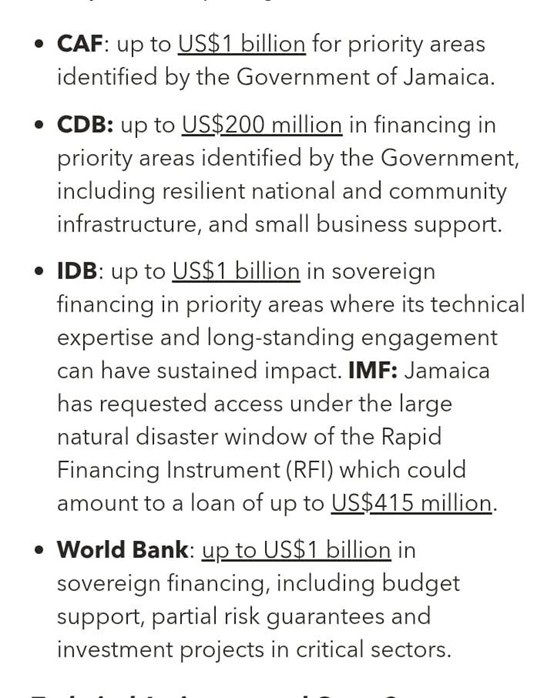
The World Bank Group (WBG), the Inter-American Development Bank Group (IDB), the Development Bank of Latin America and the Caribbean (CAF), the Caribbean Development Bank (CDB), and the International Monetary Fund (IMF) announced on December 1 that they would provide financial support to Jamaica through a combination of emergency financing, sovereign loans (funds borrowed by a country’s government from other countries, international organisations, or private institutions), grant support, and private sector investment. Several of these agencies currently prioritise the promotion of LGBTQ rights through conditional policies attached to grants and loan arrangements.
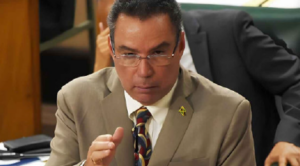
The request for financial support from the agencies was made by Prime Minister Andrew Holness, who insisted in parliament on Tuesday that the country is in need of more money to build back after the devastation caused by Hurricane Melissa.
Jamaicans living in some of the hardest-hit communities, local and international journalists, bloggers, and local civil society and lobby groups have criticised the government for its lack of transparency and not doing enough, as thousands of Jamaicans remain homeless, hungry, and in need of some semblance of normalcy. But the Prime Minister has threatened “war” against those who continue to promote this thinking and has maintained that the financial commitment from the international community is an indication that there is a level of confidence in his government’s handling of the post-hurricane relief efforts.
“This is the single largest and most comprehensive development package ever assembled for Jamaica,” he boasted on Tuesday, before adding, “Securing support of this magnitude within one month of Hurricane Melissa is nothing short of historic.”
The Prime Minister outlined three components of the international financial assistance. Of note is the fact that the international groups will not just be providing grants and loans but will be providing technical assistance and policy advice.
“The third important component of the overall financing package would see the five institutions committing to provide technical assistance and policy advice services. They would provide, Madam Speaker, policy advisory services which would be funded by grants that draw on global experience and best practices in disaster response,” he said.
One of the major concerns raised by members of the public is, what will the country have to give in return for this massive injection of international funding?
During Tuesday’s sitting of Parliament, Opposition leader Mark Golding broached the subject. He noted that the majority of the multi-billion dollar allotment will incur a huge debt, which will have to be financed by Jamaicans.
“These debts that we are now going to be incurring to finance our attempts at recovery are like lending money to a business that suffered losses through some kind of crisis that it is trying to dig itself out of a hole from. Taking on additional debt to do that is going to be a challenging role for any country; therefore, I don’t think it is appropriate to treat these announcements in a triumphant way. We are going to be incurring the cost of paying back this massive additional borrowing in years to come,” he said.
The Christian community also has concerns. International funding agencies have not spared any money in efforts to get Jamaica to repeal its buggery law. Organisations such as the World Bank, the Inter-American Development Bank Group (IDB Group) and the International Monetary Fund (IMF) have been promoting LGBTQ+ inclusion and gender mainstreaming as components of their programmes in other countries.
Unlike his predecessors and the majority of Jamaicans who have consistently voted against the repeal of the buggery law, Holness has not been clear in his stance against the unrighteous lifestyle.