According to the 2011 census, 69 percent of Jamaicans identify as Christians. Jamaica’s Christian landscape includes a wide range of denominations. Based on the census, 26 percent of the population belong to various branches of the Church of God, 12 percent Seventh-day Adventist, 11 percent Pentecostal, 7 percent Baptist, 3 percent Anglican, 2 percent Roman Catholic, 2 percent United Church of Christ, 2 percent Jehovah’s Witnesses, 2 percent Methodist, 1 percent Revivalist, and 1 percent Rastafarian, while 2 percent maintain some other form of spiritual practice.
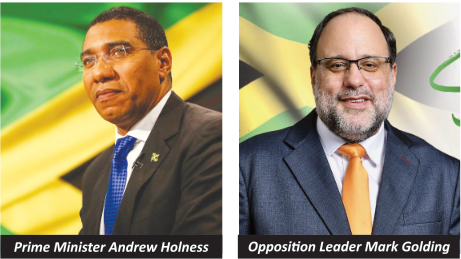
Prime Minister Andrew Holness is aligned to the Seventh-day Adventist community, and he has been publicly embraced by its leadership as one of their own. The Prime Minister has often spoken about his Christian upbringing, which includes attending Sabbath School. In the last census the Seventh-day Adventist Church was deemed to be the fastest-growing denomination in the country. On the other hand, Leader of the Opposition Mark Golding, who is also vying to be the country’s next Prime Minister, has not publicly indicated his religious leanings. While he has Jewish roots, Jamaicans are not clear where he stands on several pressing issues of concern to the Christian community.
The opposition party has also been pushing for the country to adopt the Caribbean Court of Justice as its final appellate court, a move that has not found favour with several Christian groups in the island. Chairman of the Jamaica Coalition for a Healthy Society (JCHS), Dr Wayne West, said the Caribbean Court of Justice has not received the support of the Christian community because of the role it has played in pushing the LGBTQ agenda regionally.
“The Privy Council, although its views are liberal, it walks more closely with the law as written, unlike the Caribbean Court of Justice, which is an extremely liberal court, which is committed to being activists, interpreting laws, and interpreting constitutions to create all sorts of fringe rights,” he said.
“I would love to have a final court of appeal in the Caribbean, but we must make sure that that court has a philosophy that works for the good and the flourishing of human beings,” insisted Dr. West.
Other Christian groups, such as the Lawyers Christian Fellowship and the Association of Christian Communicators and Media (ACCM) have also expressed similar concerns.
Dr West noted that he is additionally concerned about the perception of corruption involving those who are vying for public office.
“As Christians, we should be concerned about issues of integrity and corruption, because corruption impoverishes countries. It denies the citizens services that they ought to get because the money is shunted away,” he said.