Dear Editor,
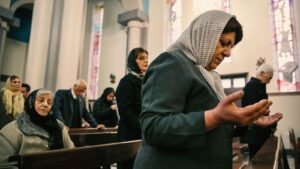
In September 2022, Mahsa Jina Amini — a twenty-two-year-old Kurdish-Iranian woman — was arrested by Iran’s Morality Police for an improperly worn hijab. She died in custody three days later. Millions rose in the streets chanting ‘Zan, Zendegi, Azadi’ — ‘Woman, Life, Freedom’ — a slogan rooted in the Kurdish liberation movement and now the conscience of a generation. The regime’s answer was bullets, mass arrest, and the public torture and execution of teenage girls. Nika Shakarami was sixteen. Sarina Esmailzadeh was fifteen. The world watched, then largely looked away.
The Islamic Republic was not inevitable. The 1979 revolution was seemingly broad—secular liberals, feminists, socialists, and nationalists all marched against the Shah. Khomeini’s Islamist movement, after a brief marriage, then devoured them. Leftist and liberal allies were purged, imprisoned, and executed. Women who had marched for the revolution were almost immediately ordered to veil. The “Summer of Blood” of 1988 saw the extrajudicial execution of thousands of political prisoners on Khomeini’s direct fatwa.
What enabled it? Partly, a remarkable failure of Western intellectual nerve. Michel Foucault travelled to Tehran in 1978 and wrote of Khomeini’s movement as a noble rejection of “Western modernity”—political romanticism that aged catastrophically within months. He was not alone. A generation of academics and pundits, conditioned to see any enemy of American and Western power as a potential ally, provided cover for theocratic fascism. The Soviet-aligned Tudeh Party collaborated with the Islamists, calculating they could control the movement. They were among the first hanged.
This pattern — the Red-Green alliance, where the left romanticises or enables Islamist and authoritarian movements — did not die in 1979. We see echoes of it today: in Western academics defending Hamas while ignoring the extermination of Gaza’s own liberal class; in progressive pundits excusing the Maduro regime in Venezuela with the same anti-imperialist vocabulary; in the persistent soft-pedalling of Cuban repression; in the spectacle of Western campus movements marching in effective solidarity with movements that would imprison or kill every one of their members. The ideological architecture is identical: anti-Americanism substituting for moral analysis, the enemy of Washington automatically redeemed.
The documented record of the Islamic Republic is not ambiguous. It is the world’s foremost state sponsor of terrorism, funding Hezbollah, Hamas, Palestinian Islamic Jihad, and the Houthis. It assassinates dissidents on European soil. It has pursued nuclear weapons for three decades while openly calling for the destruction of Israel and the United States of America. It imprisons, tortures, and executes journalists, lawyers, and activists. It subjects women to legal apartheid. It systematically persecutes Kurds, Christians, and other ethnic minorities. This is not contested. It is documented by Amnesty International, Human Rights Watch, and the United Nations.
We must speak honestly about what ending this regime would mean. War is hell. Every innocent life lost is a tragedy without qualification.
But moral realism cuts in both directions. As Mariam Memarsadeghi has argued compellingly, the pre-war status quo in Iran was not peace—it was managed, state-sponsored suffering, generation after generation, underwritten by the world’s indifference. Writing in the Free Press, the case was made directly: the prospect of a regime-ending reckoning, painful as it is, may represent the only realistic path to Iranian freedom.
The hope is of a free Iran: a civilisation of 88 million people, heirs to one of the world’s great cultures, finally governing themselves. That hope is worth moral clarity. It is worth naming the regime for what it is. It is worth refusing the comfortable equivocations of those who have never had to live under it.
There are worse things than war. Allowing evil to stand unchallenged, generation after generation, is one of them.
The women of Iran have already shown their courage. The least the rest of us can do is match their honesty.
I am,
Francesca Tavares