There is a particular kind of silence that settles over unfinished places.
You see it in the unbuilt lots where grass grows waist-high. In the half-started houses where concrete hardens but life never arrives. In the roads that were meant to be temporary but somehow became permanent — patched, repatched, and quietly endured.
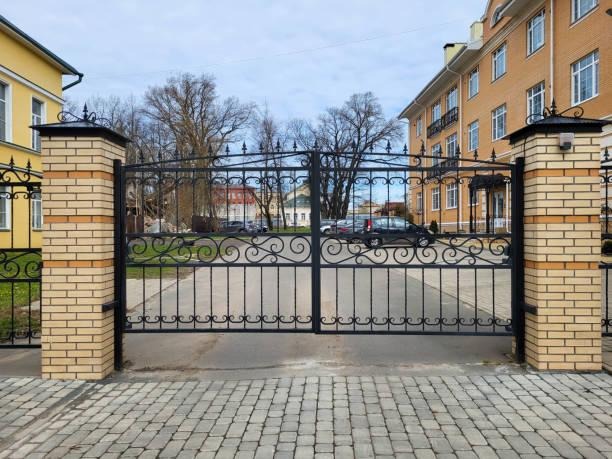
Across Jamaica, gated communities were imagined as orderly spaces. Not luxurious necessarily, but intentional. Places where people shared not just a boundary wall, but a responsibility for what lay within it.
Yet many of these communities now exist in a state of imbalance.
Some homes are lived in, swept daily, with lights glowing at dusk. Others remain plots on a map — owned, but absent. The gate still opens for everyone. The road still carries all vehicles. The drains still collect all the water. But the costs of keeping the place functional are not shared equally.
Over time, that imbalance becomes visible.
It appears in the pothole that never quite gets fixed properly. In the drain that floods again every rainy season. In the quiet resentment that creeps into community meetings when the same names appear on every collection list, and the same others never do.
This is not neglect born of malice. Often it is distance. Or intention deferred. Or a belief that ownership alone is contribution enough.
But communities do not run on intention. They run on upkeep.
In many developments, residents respond as Jamaicans often do: informally, collectively, and pragmatically. A small group pools money. Someone knows someone with equipment. A bush is cut back. A container is moved. The place is made passable again.
What is striking is not that this happens, but how often it has to.
Because the structures meant to govern shared living were never fully built.
These communities were gated but not governed.
There are other silences too.
The silence of a developer who is no longer there — through death, departure, or financial exhaustion. Trucks and materials left behind as mute evidence of plans that ran out of momentum. Residents inherit not only their homes but also unfinished systems they never agreed to manage.
And so responsibility shifts sideways, informally, unevenly.
This is the quiet reality that now sits behind proposed changes to how shared communities are regulated.
At its heart is a simple proposition: that shared spaces require shared responsibility and that goodwill alone cannot sustain infrastructure indefinitely.
From one angle, this feels overdue. Roads and drains do not care whether an owner lives overseas. Security does not become cheaper because a house remains unbuilt. Maintenance costs do not politely wait until everyone feels ready to participate.
From another angle, the proposal unsettles something deeply held: the sense that land ownership should be free from interference, especially when development is slow, personal, or shaped by circumstance.
Jamaica has always been a place where people build in stages. A footing this year. A roof when the money allows. Time is part of the architecture.
Any system that treats delay as delinquency risks misunderstanding how people actually live and build here.
This is where balance matters.
The question is not whether shared communities should have rules. They already do — just unevenly applied, socially enforced, and often exhausted by repetition.
The question is whether formalising those rules will bring clarity or simply shift pressure into a different form.
There is a risk, always, that systems designed to create order become blunt instruments. That enforcement replaces dialogue. That fear replaces cooperation. That power, once centralised, becomes personal.
But there is also a risk in leaving things as they are.
Because places slowly decay when responsibility is optional. And once decay sets in, it is rarely neutral. It costs money. It costs trust. It costs value.
A well-kept community does not happen by accident. It is the result of many small, consistent acts — paid for, organised, and agreed upon.
The challenge now is not whether Jamaica should take shared living seriously. It already must.
The challenge is whether the systems being proposed can recognise the difference between neglect and patience, between absence and refusal, and between ownership as speculation and ownership as intention waiting for its moment.
Because the most enduring places are not those built quickly or perfectly. They are the ones that are allowed to grow — but not unravel.
What Jamaica decides to formalise now will shape not just how communities are maintained, but how responsibility itself is understood in shared space.