Canada-based Christian think tank, Cardus, has publicly denounced a plan to ban the practice of praying in public in the province of Quebec. It has also cautioned that the proposal indicates a growing misunderstanding of religion’s role in society and may undermine institutions central to civic life.
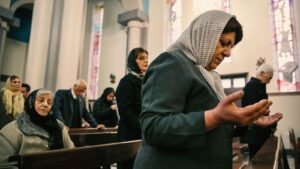
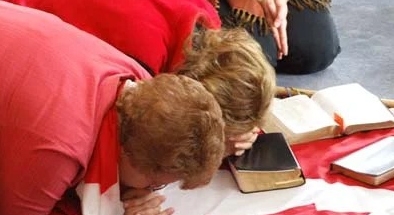
The proposal was first suggested by Quebec’s premier, François Legault, and later presented by Quebec’s minister responsible for secularism, Jean-François Roberge. It was a direct response to Muslim prayer meetings at pro-Palestinian demonstrations, but if implemented, would prohibit all religions, including the approximately 64.8 percent of Quebec’s population that identify as Christian. “Seeing people praying in the street or in public parks is something we don’t want in Quebec. When you want to pray, go to a church or a mosque, not a public place,” the Premier had said.
In a written statement, Roberge said that the increase of street prayers was “a serious and sensitive issue in Quebec.”
The minister also took to social media to express his intentions. “The proliferation of prayers in the street is a serious and sensitive issue in Quebec. Last December, our government expressed its malaise in the face of this phenomenon, which is more and more present in Montreal. The premier of Quebec gave me a mandate to reinforce laicity, and I have the firm intention of fulfilling this mandate with diligence.”
Cardus has not only made objection to these expressions by the government officials but also vocalised concern regarding a committee report on Quebec’s Act Respecting the Laicity of the State, more commonly known as Bill 21. This legislation was passed in 2019 and entrenched Quebec’s secular model, resulting in the banning of public servants from wearing religious symbols while at work. It is also meant to be one aspect of a bill aimed more broadly at promoting secularism in Quebec.
Upon review of Bill 21, the government-commissioned committee report suggested limiting religious accommodations and extending the ban on religious symbols to daycare workers.
The nearly 300-page report also looked at public prayer but did not go as far as to recommend that the government ban the practice. It, however, recommended that the decision be up to municipalities to regulate the practice.
In response to these statements, Jean-Christophe Jasmin, Quebec director at Cardus said the committee expressed concern at the recommendations.
“The committee’s mandate is to draw up a portrait of respect for secularism and religious neutrality within state institutions. It must analyse any phenomenon that could hinder their effectiveness, including the exercise, direct or indirect, of religious influences in the institutions of the Quebec state.”
The research entity has observed that despite the consideration and implementation of oppressive legislation, religion remains entrenched in the lifestyle of citizens. Their data indicates that more than 20.9 million people currently attend religious services annually in the area. This figure, Cardus said, is more than the attendance generated by all performing arts and entertainment combined.
“Religious communities are an integral part of the Québécois nation, and their social commitment benefits everyone,” Jasmin said. “Implementing recommendations that would weaken this fundamental part of Quebec civil society would seriously undermine social cohesion and community engagement throughout Quebec.”