Ingredients for the dressing:
- 1 ripe medium avocado
- 1 cup plain coconut jelly yogurt (see recipe below)
- 1/2 red onion, chopped
- 3 tablespoons fresh squeezed lime juice
- 2 tablespoons olive oil
- 1 clove garlic, smashed and minced
- 1 tablespoon Italian parsley or cilantro
- 1/2 teaspoon sea salt
Directions: Combine all of the ingredients in a blender, and blend until smooth. Check salt and acid levels and adjust as needed. Refrigerated, dressing will keep for several days.
To assemble the salad:
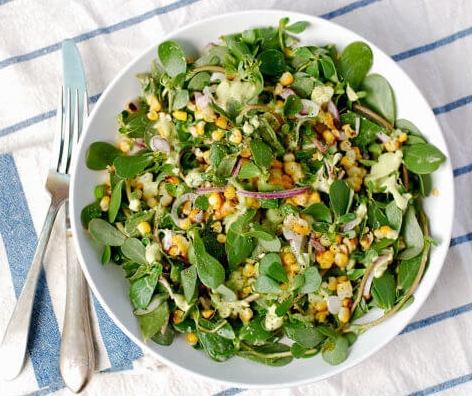
- 1 bunch purslane
- 2 ears of corn, grilled
- 1/2 red onion, sliced paper thin
- pinch sea salt
Directions: Wash the purslane and trim any large stems. Tear the stems into bite-sized lengths. Meanwhile, husk the grilled corn, if needed, and cut the kernels off the cob. Toss the purslane, corn, and red onion together with a pinch of sea salt in a large salad bowl. Drizzle with dressing, and turn to coat.
PURSLANE – SO MUCH MORE THAN A WEED
If you’ve never heard of purslane (Portulaca oleracea) before, here is a picture. You might recognise it as that pesky little weed all over your garden that just won’t go away; but now you might find yourself coaxing its growth, as its leaves are abundant in omega-3 fatty acids, specifically, alpha-linolenic acid.
Rich in Omega-3
Purslane’s omega-3 property is a rarity in the plant-kingdom and means that this ‘pesky little weed’ is actually a formidable ally – as omega-3s are crucial for a strong immune system, useful in controlling high blood pressure and cholesterol levels, aid in fighting inflammation in the body, reduce the risk for heart diseases, and help to manage cognitive function.
Purslane can be consumed raw or cooked as long as it has not been exposed to pesticides. Shown to contain five times higher omega-3 fatty acids than spinach, it is a rich source of potassium (494 mg/100 g), magnesium (68 mg/100 g) and calcium (65 mg/100 g). The red colour of some sections of the plant is a tell-tale sign that it contains anti-oxidants as well.