Different governments have played a wicked game of political football with the public health system, one set leaving it sicker than the previous and in critical need of intensive care.
Over decades, the system has suffered from years of chronic bed shortage, broken diagnostic machines, lack of basic medicine, dysfunctional operating theatres, days-long waiting times for simple casualty cases, and the constant rescheduling of urgent procedures.
Jamaica has lost patients who arrived at hospitals sick, worsened during the wait, and eventually died propped up in chairs without ever seeing a doctor.
Women in labour wards have had to share beds, while bringing the next generation kicking and screaming into the sick surroundings at public hospitals they could not avoid.
There have been reports of rat infestations in some facilities, and if there was heavy rainfall, staff have had to leave their posts to secure mops and buckets to keep fragile patients dry and water at bay.
Kingston Public Hospital (KPH), the oldest and largest trauma centre in the English-speaking Caribbean, has seen the best of times and the worst of times.
The 1907 earthquake that demolished large parts of Kingston, killed over 1000 persons and injured many others, also destroyed sections of KPH and shut down its water supply. Yet, the facility, located in the heart of the devastated city, remained functional and continued treating the hundreds of injured throughout the disaster.
Since KPH was established on December 14, 1776, it has bounced between seasons of jubilation and heartrending tragedies for roughly 250 years. It has served generations of Jamaicans in the crowded urban centres and far-flung rural parts, and is regarded as the island’s top healthcare facility.
Regardless of its proven expertise and the overwhelming demands on its services, the KPH is the bane of the public healthcare system and is snubbed and scorned by decent society.
In 1996, a British television station featured KPH’s centuries-old challenges to global attention in a documentary called Jamaica ER.
The film, produced for the British television Channel 4, was a “fly-on-the-wall” account of dilemmas in the casualty unit, crises in accident and emergency, and the dysfunctional operating theatre services at the KPH.
It detailed the ramshackle state of the public healthcare system and showcased the disgusting and disturbing conditions in Jamaican hospitals.
If Channel 4 were to revisit the island today, the Jamaica ER would prove to be much worse than when they visited international humiliation upon the land nearly forty years ago.
Not to mention the Cornwall Regional Hospital (CRH), the pride and joy of western Jamaica. Things are even more woeful there.
This facility continues to face a series of severe crises, with patients sometimes treated on floors. Nurses and doctors have protested against dangerous conditions, with over 100 patients sometimes occupying an area designed for 35.
The hospital has been under reconstruction for years, with significant delays and cost overruns hindering its full operation.
Staff shortage across the public health sector has been ongoing since time immemorial. Calls to train more doctors and nurses locally fall on deaf ears.
The working conditions and the pittance that is paid to healthcare workers force many to look overseas for employment. Every year, Jamaica loses well over 500 specialist nurses to migration. Scores of Jamaican doctors and other medical personnel are regularly recruited by both the public and private healthcare providers in the United States, the United Kingdom, and Canada at very attractive starting salaries.
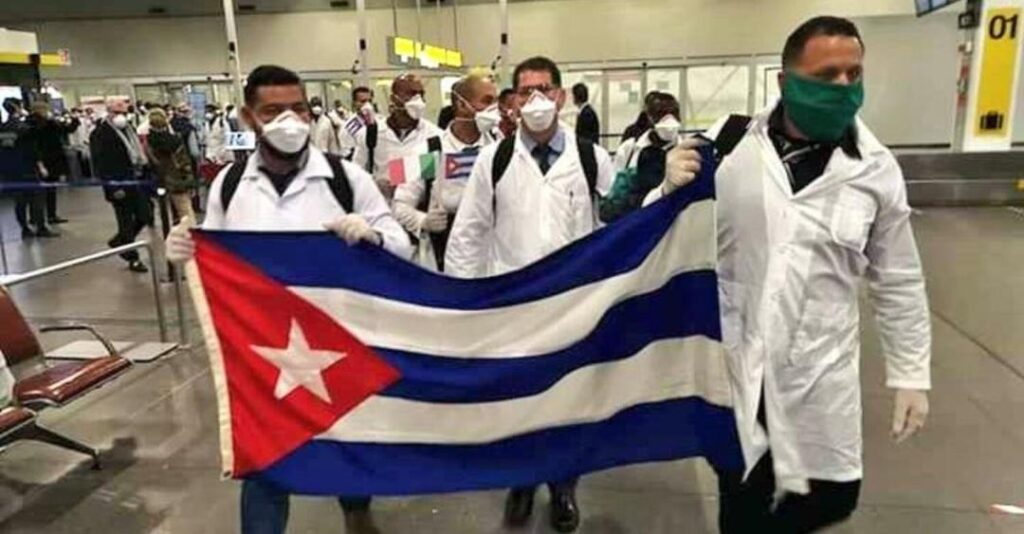
It is under these dire conditions that Cuba, a country under heavy economic sanctions for decades, where basic services are strained, blackouts are plentiful, and resources are tight, dispatches medical missions every season to help its neighbours.
For ages, Cuba has invested in the education of its population and sends them on missions around the world. This allows the communist country to earn international currency, which they use for cash purchases of oil and other critical supplies on the global market.
While food and other basic necessities are heavily rationed and well-worn buildings bear the evidence of rat infestation, education and healthcare are free to the entire population.
Many international students also travel to Cuba for training in medicine, education, veterinary services, and other vocations and return to their home countries at the end of their programmes qualified to serve at the highest levels.
Cuba uses its medical mission to maintain its linkages with the world beyond the reach of United States sanctions. This country must purchase all its imports with United States currency it does not earn, and ways and means are employed to get just enough greenback for its people to survive.
Cubans on mission understand the drill. They do not complain about their salaries going to their government, because they are well aware that families must be fed and that their country must survive under the dire constraints of sanctions.
Despite their fragile economy and the tough working conditions within the Jamaican public healthcare system, in which they serve, the Cubans come.
In March 2020, under the global strains of the COVID plandemic, 140 Cuban medical professionals, including 46 doctors and 90 nurses, arrived in Jamaica to assist with the response.
Sending home the Cuban healthcare workers based on a 50-year-old salary arrangement is further crippling the sick health system on which the majority of the population must rely, and adding another layer of woes to the brittle Cuban economy. It is like imposing a type of sanction designed to strangle the last breath out of the dying in Jamaica and Cuba at the same time.
Jamaicans, especially those who depend on the pop-down public healthcare system, must pray for better, for our own country and for our Cuban brothers and sisters.
It is a sad state of affairs.