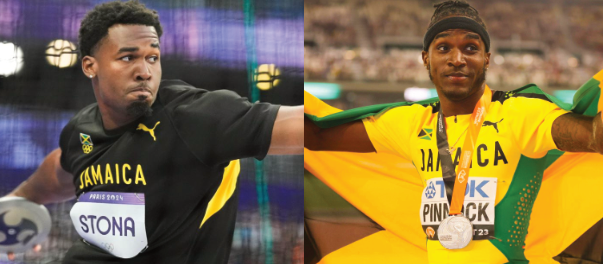
In a year where Jamaican athletics should be basking in the glow of upcoming historical achievements, the sport finds itself grappling with an uncomfortable truth, a growing exodus of elite field athletes who have chosen to represent other nations. The recent nationality switches of Wayne Pinnock, Roje Stona, Jaydon Hibbert, and Rajindra Campbell to Turkey have not only stirred national debate but also raised critical questions about the long-term state of Jamaica’s track and field ecosystem, particularly in the oft-overlooked field events.
Wayne Pinnock, the charismatic long jumper who has donned the black, green, and gold at multiple global championships, has finally broken his silence on the matter after a competition at the London Diamond League meeting over the weekend. Pinnock edged Olympic and World champion Miltiadis Tentoglou of Greece with a winning leap of 8.20m, before confirming what had already been whispered in circles: his allegiance had changed.
“I will not be in Tokyo because I have changed allegiance to Turkey,” Pinnock said. “So I will go back home and fix what needs fixing and come back stronger.”
For a nation that once celebrated Pinnock as a rising star, the statement landed like a jolt. Yet, Pinnock’s words hinted at deeper frustrations, perhaps systemic, perhaps personal, that prompted his departure.
His compatriot Roje Stona, Jamaica’s first-ever Olympic gold medallist in the men’s discus, offered even more clarity on the matter, framing his decision not as betrayal, but business.
“I think it was just a smart decision on my end,” Stona told reporters. “The offer came up… and based on how my career is going, I think it was the smartest decision so far. I’m a professional.”
Stona, still basking in the glory of his historic Olympic win, was quick to clarify that his move wasn’t tinged with bitterness, but pragmatism. With opportunities drying up and infrastructure still lagging for field events in Jamaica, the allure of better financial backing and year-round support proved too difficult to ignore.
In fact, Stona’s journey nearly detoured entirely from athletics. Earlier this year, he flirted with a career in the NFL through the league’s International Player Pathway Programme, even earning invites to rookie camps with the Green Bay Packers and New Orleans Saints.
“Not really that hard,” he said of the nationality switch. “It wasn’t anything personal. It was just on a professional level.”
Their exits, along with those of Campbell and Hibbert, cast a shadow over a Jamaican system that has long prioritised sprints over throws and jumps. While Jamaica remains a global powerhouse on the track, commanding headlines, the field athletes continue to struggle for resources, visibility, and investment.
For years, local coaches have decried the imbalance in support between the two disciplines. The rise of Pinnock, Stona, and others had signaled a changing tide, proof that Jamaica could compete, not just on the track, but in the ring, the pit, and beyond. Now, as they soar to new heights under another flag, the question looms: what more could they have achieved if their roots had been nurtured at home?
If there’s one lesson Jamaica must grapple with, it’s that talent alone isn’t enough. Without infrastructure, athlete welfare, and financial pathways, even national heroes may feel forced to find new homes.