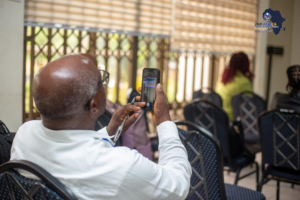
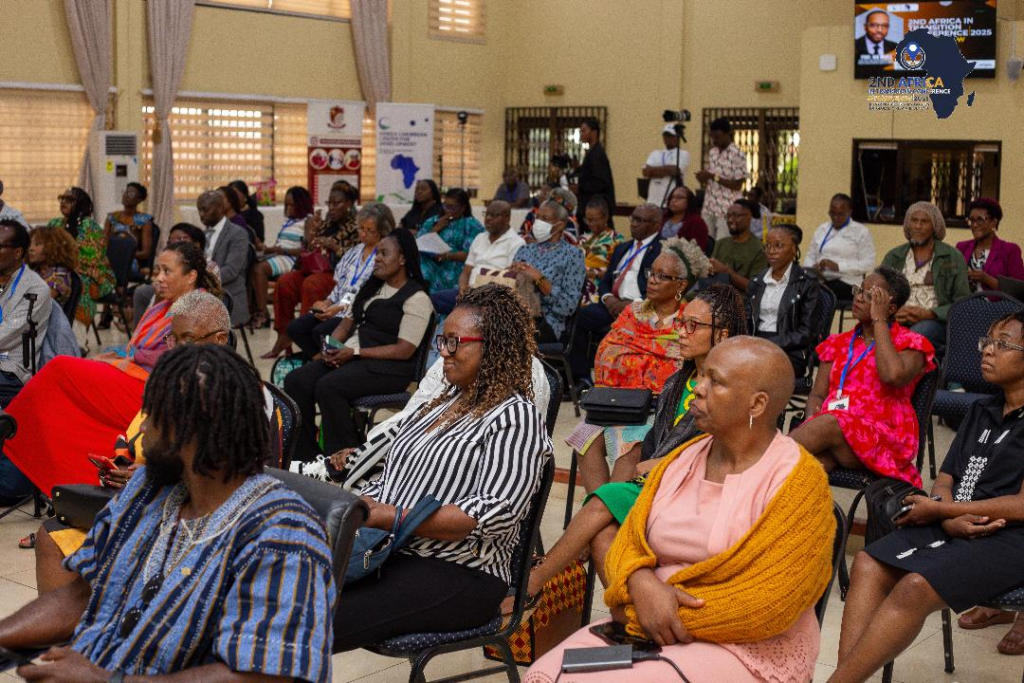
I, along with an Afro-Caribbean team of experts from Jamaica, Trinidad, and Ghana, attended and presented our work at the second staging of the Africa in Transition (AIT) Conference in Accra, Ghana, in October 2025. This conference was held at the University of Ghana (UoG), in the beautiful suburb of Legon. Legon is home to some of Ghana’s prestigious educational institutions, the University of Ghana being one such and the largest higher education institution in Ghana. This campus was colossal and reminded me so much of the UWI Mona Campus, back home in Jamaica. When you are at UWI, it feels like a country within a country, given how big it is. On campus, you have supermarkets, restaurants, and banks. There is a museum, a theatre, and lodging facilities, among other amenities.
However, UWI’s 653-acre property pales in comparison to just over 2800 acres at UoG! I saw banks and huge concrete buildings, dedicated in honour to Ghanaians. Distances between buildings at UoG were so great that many people drove cars and only a few walked. How do students manage on the UoG campus? I thought to myself. They should be physically fit! I thought this many times while traversing the campus on the conference bus. For persons who think that Africa is a place of suffering, poverty and wars, it is my hope that my account of my sojourn there changes that thinking.
Remember, Africa is a continent and not a country; it has 54 countries and a population of just over 1 billion. There are persons living there with different languages, races, and ethnicities. So, generalisations, especially from mainstream media, can no longer hold.
AFRO-CARIBBEAN WORKING GROUP
My colleague and I established an Afro-Caribbean working group several months before the AIT conference, aiming to utilise research to bridge the divide between the two regions. Our newly formed group was interested in topics related to food security and agriculture, education, information technologies, energy, disaster management, and economy – for the sustainable development of both regions.
For the next couple of months, we worked assiduously on these topics, narrowing the list down to educational technologies for mainstream and special needs students, solar energy for increased productivity on farms, and the enhancement of economies through Sir Arthur Lewis’s theory for economic development (1973). We knitted these ideas together and delivered a successful presentation in Ghana.
Interestingly, my foreparents were forcibly brought to the Caribbean from Africa and became enslaved on sugarcane plantations. This lasted for over 400 years and is referred to as the Trans-Atlantic Slave Trade. The key word here is trade.
But in 2025, as a descendant of African foreparents, I have returned to Africa to speak on issues related to trade and development. How ironic is that? The difference is that the intention is to do so humanely and with benefit to both regions, as opposed to the inhumane practices of colonial powers, whose benefit was one-sided, to say the least. I believe that Africa should benefit from exchange and no longer be exploited for its resources. This is at the highest level, Christ’s level, where restoration and reconciliation can be made to offset the pain and costs of slavery. As Christians, how can we learn from such a tumultuous past, forgive, and make it better? Can it be done? Yes, it can, but all hands are needed on deck.
So, the AIT conference theme was timely, i.e., “CENTERING THOUGHT AND ACTION OF GLOBAL AFRICA AND BEYOND.” This translates to me as African development and transformation, and how the African diaspora can contribute to it for the betterment of both. Yes, we can benefit, and benefit well.
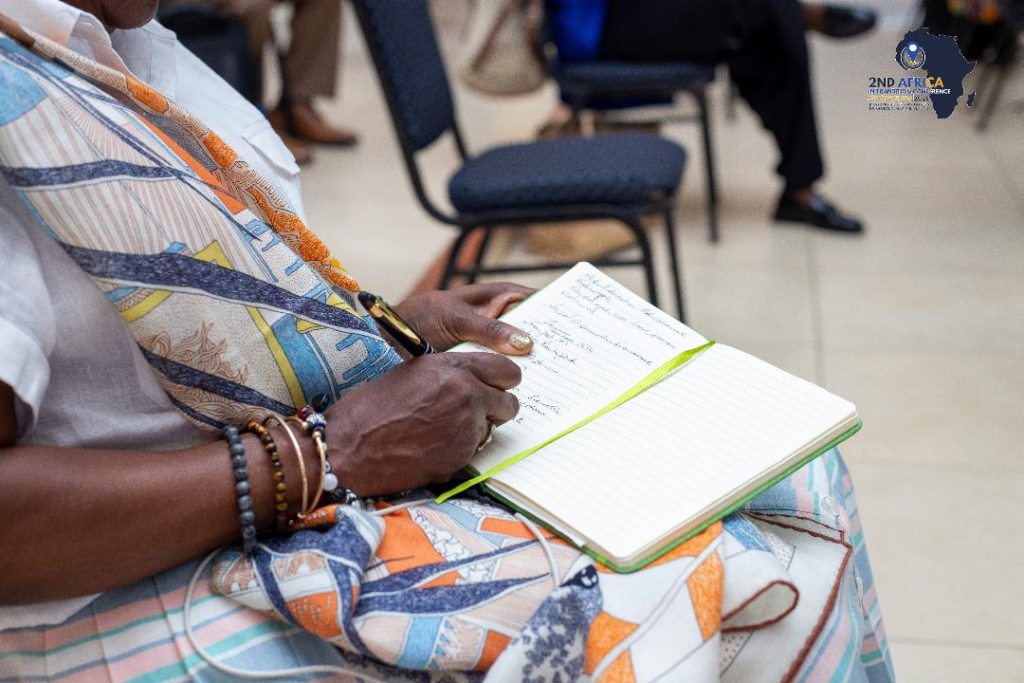
So, in the words of my Nigerian friend, as we so often talk while the ‘bigger heads’ are fighting with each other, we should regroup and build, especially in these end times. We have to become self-sufficient, yes, but we can also consider other opportunities for trade and development outside of the familiar. How about with Africa?
Back to Africa, to me, is thus not a backward movement, but a forward one.
Follow my journey, my sojourn to Accra, Ghana, as I discuss the topic of innovation and technology in the next article. If you thought that the African continent was devoid of technology and was lagging behind, you thought wrong! Some of the greatest inventions and uses of technology arise from the Motherland.
Chuuwod is a Jamaican geo-scientist who has travelled across Africa, Asia, and the Americas