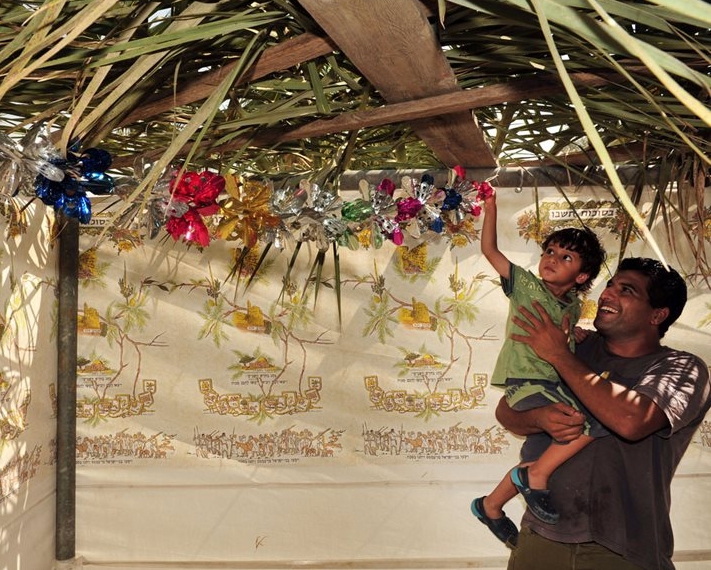
Do you feel the excitement in the air? No? Let me refresh your memory because we’re going to be spending some time on the outside, not in the open air, but in tents. Why tents? We shall be looking back on the days when the people of a mighty nation lived a nomadic life in tents over the 40-year trek through the Sinai desert after they were delivered from many generations of bondage in Egypt.
YOM KIPPUR/ATONING FOR OUR SINS
We have just come out of another biblical moed, the feast of Yom Kippur, or the Day of Atonement, which is really a day of fasting and repentance. This year, Yom Kippur started just a few minutes before 6:00 pm on Wednesday, October 1, 2025 (or the 10th day of Tishrei 5786), and went for about 26 hours into the late evening of Thursday, October 2, 2025 (11 Tishrei 5786). As we fasted during that period, we were encouraged to confess our sins and make restitution, or forgive debts from the previous year.
Biblically, on this day—and only this day—the high priest of Israel would enter the Holy of Holies with the blood of an unblemished lamb and would make atonement for the whole nation.
Leviticus 16 outlines how and why this time of atonement was needed, as well as the type of atonement (a live goat representing the scapegoat).
Nowadays, the priest would spend the prior week in seclusion, and the night before the great day would stay up all night in prayer and study of Torah. It is interesting to see how Yeshua also stayed awake in prayer the night before He was crucified.
After Yom Kippur, on the 15th day of Tishrei 5786 (October 6, 2025) and continuing for 7 days, until October 13, 2025, the last pilgrimage feast is observed by the people of God, and this moed (feast day) is known as Sukkot.
CHAG HAASIF/CHAG HASUKKOT
This weeklong celebration is also a time of harvest. In Israel, crops grow in the winter and are ready for harvest in the late spring. Some of them remain out in the field to dry for a few months and are only ready for harvest in the early fall. Chag HaAsif (“the Festival of Ingathering”, or “Harvest Festival”) is a time to express appreciation for this bounty. It is celebrated by the building of temporary booths — that is, sukkah — outside homes in which people eat their meals and sometimes even sleep. The booths are reminders of the transience of life and the sheltering presence of God, hence the name Chag HaSukkot (“Festival of Booths”).
There is actually a Biblical reference to booths (commonly translated as tents) found in Genesis 33:17. “And Jacob journeyed to Succoth, and built him an house, and made booths for his cattle: therefore the name of the place is called Succoth.” This was a significant time, as Jacob was meeting his brother after a protracted separation since he had run from his presence after stealing his birthright and blessing. However, the moed really is a reminder of how the children of Israel were provided for by the hand of God those 40 wilderness years.
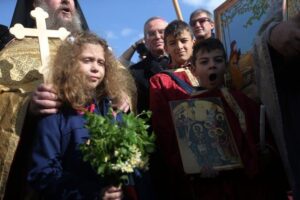
Nowadays, we celebrate Sukkot by dwelling in a foliage-covered sukkah and by taking the “Four Kinds” (arba minim), four special species of vegetation. These include a palm branch (lulav), two willows (aravot), a minimum of three myrtles (hadassim), and one citron (etrog).
ANGELIC SIGHTING
For seven days and nights, the typical Jewish family will regard the sukkah as their home. Located under the open sky, the sukkah is made up of at least three walls and a roof of unprocessed natural vegetation—typically bamboo, pine boughs, or palm branches.
In Freedom Come Ministries International (FCMI), while we are under the communal sukkah, we are encouraged to spend time reading the Word, especially the Hallel, a collection of psalms of praise (Psalms 113-118), which would typically be a part of the morning prayer service for the Jews.
For those people who are not able to tarry (wait), there will be a “drive-through” sukkah where the communion emblems are also served.
Some members of FCMI, having spent time reading the Word in the sukkah, have reported in the past seeing angels as God made His presence manifest in their lives.
According to Ezra (3:4) and Nehemiah (8:14-15), the returnees celebrated the holiday of Sukkot according to the law as it “was written”, but differences between their celebrations and the prescriptions in the Torah (Leviticus 23:34-43) suggest that the laws they had written were slightly different from that which the Jewish community traditionally celebrates. With many Christian churches globally embracing this feast day, there are variations to the Torah, but it is the spirit of the celebration that is observed.
“Chag Sukkot Sameach” (Happy Sukkot).