The Nicolás Maduro indictment allegedly
implicates unnamed Caribbean politicians in regional drug trafficking operations.
While the accused politicians have not been named, the move against Maduro has placed CARICOM’s unity and regional security priorities under pressure.
So far, some Caribbean nations have responded with a mix of alarm, cooperation, and cautious diplomacy.
Of note is the feeble response from CARICOM and the Jamaican government on the matter. The People’s National Party (PNP) has since urged the Andrew Holness administration to defend the principles of international law following developments in Venezuela. In a statement, the Opposition party called on the Government of Jamaica to unequivocally uphold long-standing principles of international law, noting that the moment also requires CARICOM to reassert its commitment to maintaining the region as a Zone of Peace—principles that have underpinned regional cooperation for decades.
Across Latin America and the Caribbean, governments moved quickly to clarify their positions and assess potential fallout. Guyana’s Prime Minister (Ret’d) Mark Phillips has assured citizens that the country remains secure and on high alert following the overnight United States military operations in Venezuela. He emphasised that the government is acting decisively to maintain national stability and public confidence, particularly in frontier regions.
“Our foremost concern is ensuring that the instability in Venezuela does not spill over into Guyana. Let me be clear: our joint services are in a high state of readiness, deployed across the borders, hinterland, and coastline, and prepared to deal with any eventuality,” Prime Minister Phillips said while speaking on Radio Mabaruma.
Meanwhile, Cuba urged the international community to respond to what it called a criminal attack.
The Conference of Heads of Government of the Caribbean Community, of which the Cayman Islands is an associate member, said it convened an emergency meeting early Saturday to monitor developments, describing the situation as one of grave concern with possible implications for neighbouring states.
Trinidad and Tobago’s Ministry of Foreign and CARICOM Affairs also confirmed, according to media reports, that the country was not a participant in any of the actions.
“Trinidad and Tobago is not a participant in any of these ongoing military operations,” read a media release from the ministry, adding, “Trinidad and Tobago continues to maintain peaceful relations with the people of Venezuela.”
All eyes on Trump
Colombia, Venezuela’s closest neighbour, rejected the US’ armed action and activated diplomatic and security measures.
In a statement from Colombia’s Foreign Ministry, the government said it opposed attacks on Venezuela’s territorial integrity and political autonomy, reaffirmed its commitment to regional peace and international law, and called for the situation to be examined through multilateral forums at the United Nations.
Bogotá also ordered the deployment of security forces along the border, strengthened preparations for potential migration flows, and activated consular services in Venezuela to assist Colombian nationals.
Russia, China, and Iran—key allies of Venezuela—also denounced the action.
UK Prime Minister Keir Starmer, in a video shared on X, stressed that “the UK was not involved in any way in this operation.”
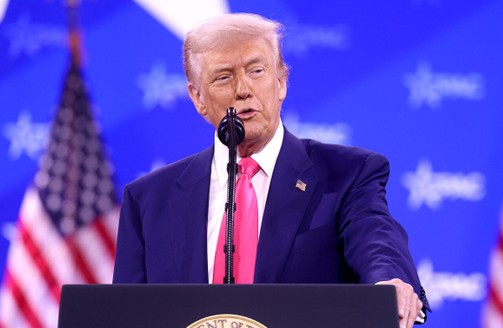
Meanwhile, the sentiments from Europe have been diverse, although the White House has indicated that Trump sees acquiring Greenland, which is part of NATO ally Denmark, as a national security priority. Any attempt to seize Greenland from Denmark would only deepen the divide between Europe and the US.