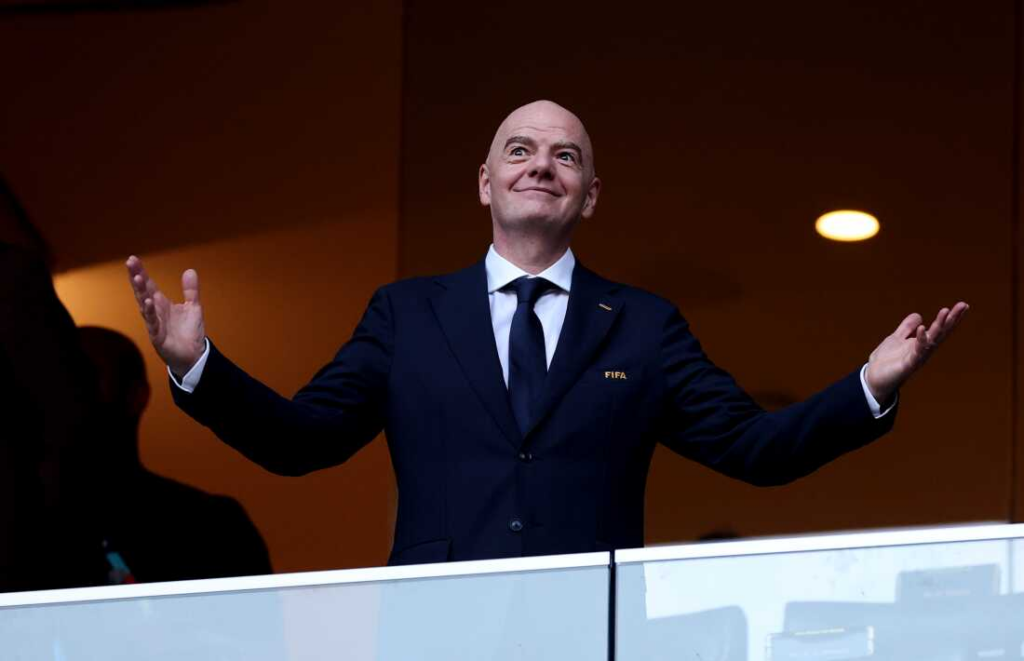
FIFA president Gianni Infantino is facing mounting pressure to step aside, with several major football bodies calling for a change in leadership amid a deepening governance crisis within world football.
The latest wave of opposition follows the collapse of Infantino’s contentious proposal to create a private investment company integrating FIFA’s commercial assets, including stakes connected to World Cup income. Football stakeholders were deeply concerned about the plan’s lack of openness, consultation, and power consolidation inside FIFA.
UEFA, the Asian Football Confederation (AFC) and CONCACAF have emerged among the strongest critics, with opposition growing over Infantino’s handling of the proposal and his wider approach to FIFA governance. The dispute has become particularly significant with Infantino preparing to seek a fourth term as FIFA president at the 2027 election. He announced his intention to stand for re-election at FIFA’s Congress in May, where he thanked the organisation’s 211 member associations for their support.
But not everyone is still in favor of it. Citing issues with governance, transparency, and democratic values, the Swedish Football Association has withdrawn its support for Infantino, stating that it no longer has faith in his leadership. Additionally, Albania is said to have stopped endorsing his candidacy. People outside of the confederations have also criticised the increasing resistance. Javier Tebas, the president of La Liga, and Sepp Blatter, the former president of FIFA, have both urged Infantino to step down, giving the leadership dispute more weight.
FIFPRO Europe president David Terrier has warned that the crisis goes beyond Infantino himself, arguing that FIFA requires fundamental governance reform. He described the current situation as evidence of a serious breakdown in trust between FIFA and the wider football community. Infantino, however, has defended his record and FIFA’s direction. The governing body has acknowledged communication failures surrounding the investment proposal but has maintained its support for the president. Infantino ultimately withdrew the project after it created divisions among member associations and other stakeholders.
The conflict now seems destined to go beyond the shelved idea and into the world game’s future leadership. The question facing FIFA as the 2027 presidential election draws near is whether Infantino can earn back the confidence of the confederations and member associations or if the mounting calls for reform will pose a significant threat to his ten-year hold on the leadership.