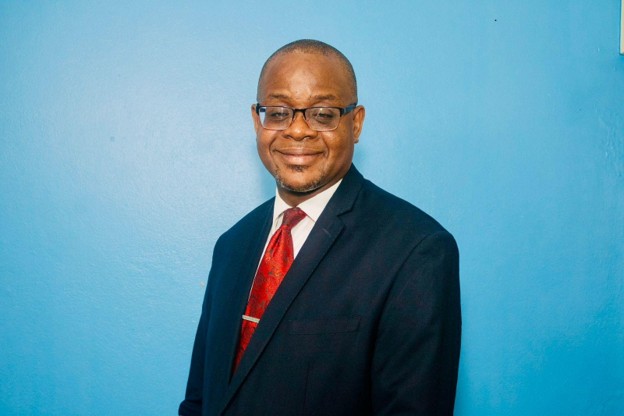
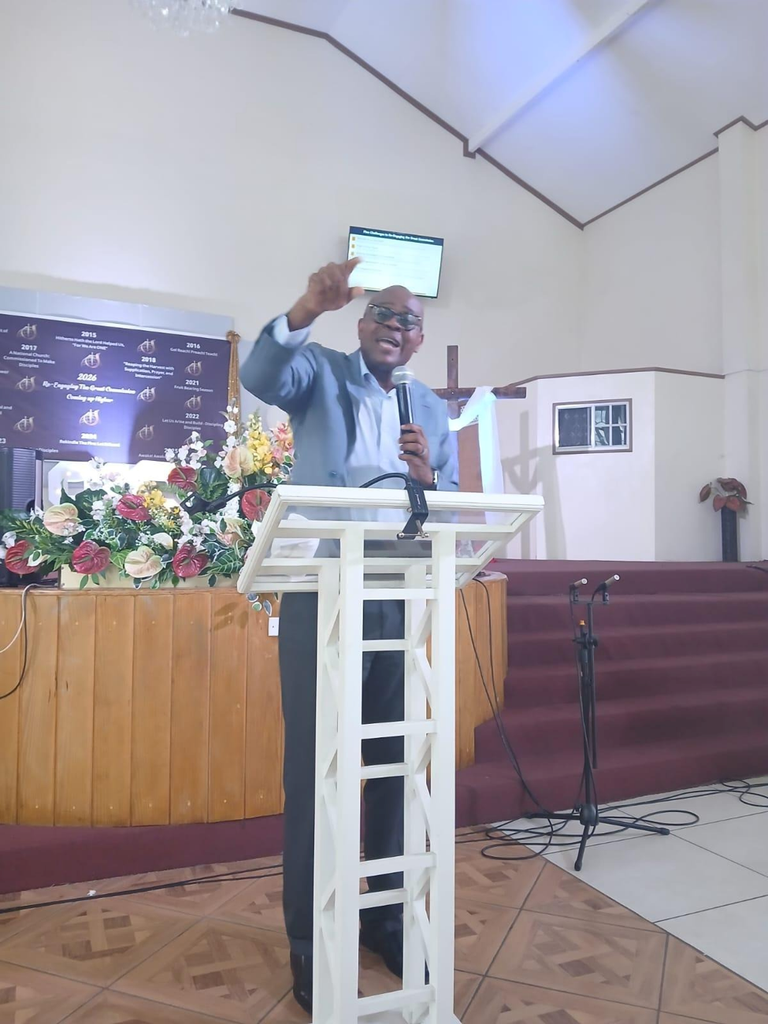
Today, Rev. Dr Earlmont M. Williams serves as the President of Bethel Bible College of the Caribbean in Jamaica.
However, leading a flock or overseeing a Bible institute was never part of his vision. Growing up, he had no dream, ambition, or inclination to become a pastor or lead a flock. His goal was to become a police officer, just like his father.
In an interview with Freedom Come Rain Newspaper, he shared that the defining moment in his life came in 1993, immediately after he graduated from high school, when he surrendered his life to the Lord.
“Before that life-transforming and destiny-determining experience, I was heading nowhere. I had left high school with four CXC subjects, which was deeply disappointing, and I had no clear sense of what to do with my life. On the final day of a youth camp, however, the Spirit beckoned me to come to Him, and I responded. God redirected my life, and I have never been the same since,” he shared.
Bishop Williams said he first recognised the call of God on his life through his personal experiences as a young Christian.
“The Lord gave me a tremendous passion for teaching and preaching. I listened to outstanding teachers and preachers every day and often found myself preaching at home when no one else was present. The call was later affirmed when a guest preacher visited my local church, called me forward, and declared that God was calling me to serve in His kingdom,” he shared.
Even then, Bishop Williams said he did not fully embrace the calling. After graduating from the Bible college he now leads, he chose not to enter pastoral ministry because he said he was discouraged by remarks made by the denominational leader to their graduating class.
Five years later, while attending a camp meeting at the Eastwood Park Road New Testament Church of God in Kingston, the preacher stopped in the middle of her sermon, walked to where he was sitting, asked him to stand, and spoke prophetically into his life, saying that God had reserved a special seat for him among great prophets.
That moment became the impetus that propelled him into pastoral ministry.
Since then, his life has been shaped by the church, theological education, pastoral service, and the conviction that Christian ministry must speak faithfully to both spiritual and social realities.
He earned a PhD in Social Research and the Integration of Religion and Society from Oxford Graduate School, now Omega Graduate School, in Tennessee.
Before becoming President of Bethel Bible College of the Caribbean – Jamaica in 2022, he served the College for fourteen years as Academic Dean. He taught biblical languages, preaching, and many other significant subjects, served congregations and the denomination, and contributed to quality assurance in tertiary education.
As an ordained bishop, he previously served for twelve years as senior pastor of the Georges Valley New Testament Church of God and for six and a half years as district overseer.
“I have served as pastor for over 20 years. My ministry has also included service on the National Executive Council, as Parish Coordinator for Northern Clarendon, and in theological education leadership,” he explained.
Bishop Williams revealed that during his years of service, there were times when he became so discouraged that he wanted to abandon it and move into other areas of life and service.
“My wife played a critical role in reminding me of the call and, more significantly, of the One who called me,” he noted.
Sharing about one of the most difficult seasons of his life, Bishop Williams said it surrounded his daughter Kharisma’s struggle with endometriosis.
“She attended school for only about seven days during the 2025–2026 academic year and later underwent surgery. Watching a child endure illness while trying to support her education and well-being was deeply painful. Yet her remarkable CSEC achievement became a testimony of courage, resilience, family support, and God’s sustaining grace. That experience sharpened my compassion for families whose private battles are invisible to the wider public,” he shared.
Speaking about how he balances his time between ministry and family, Bishop Williams said it has to be protected through deliberate choices.
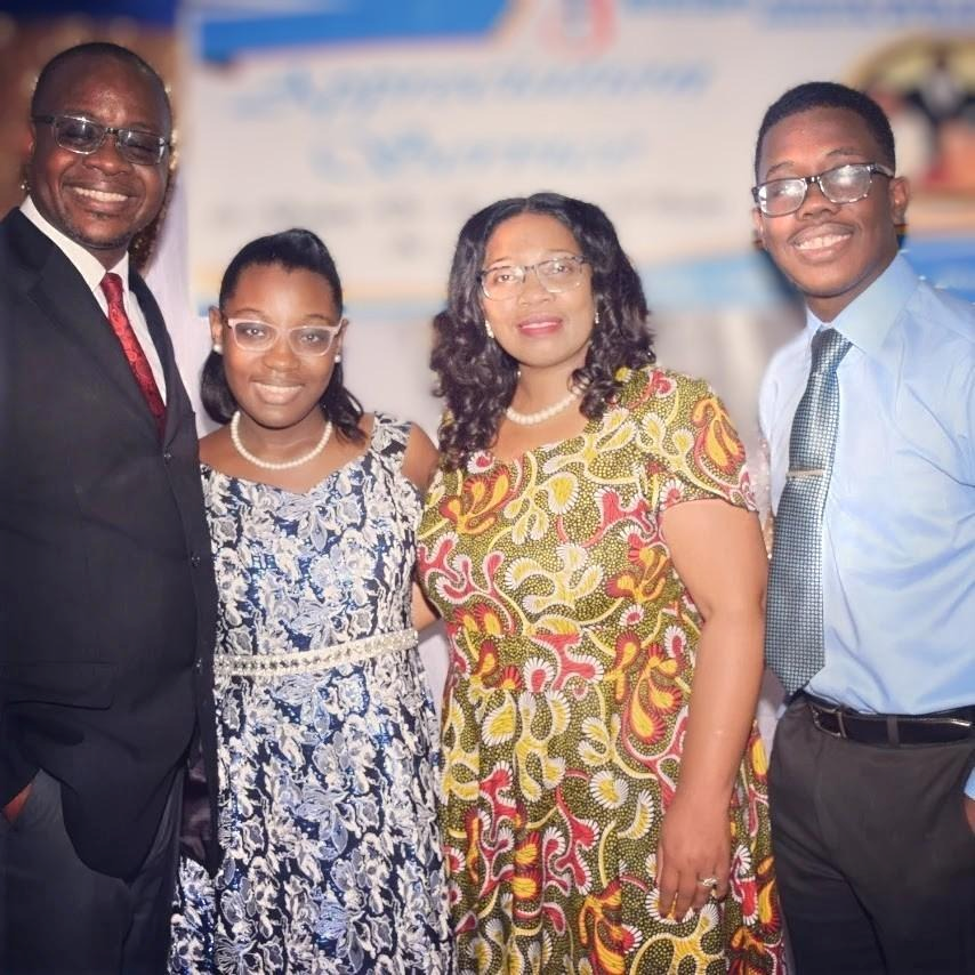
“My wife, Sydonie, has been a vital partner in our family and in ministry, and I value the strength and sacrifice she brings. I try to remain present to my wife and children even while carrying demanding responsibilities. The recent health journey of our daughter reinforced a truth every minister should remember: public ministry must never make us absent from the people God has entrusted to us at home.”
Bishop Williams said many people would be surprised to learn that he is a Vincentian by birth. Unless he mentions it, he said they often assume that he is Jamaican because he generally speaks that way.
“I came to Jamaica to study theology and prepare myself for whatever God had in store for me. After seeking divine guidance and direction, I sensed that He wanted me to remain in Jamaica; I did not stay for any other reason.
“In time, I decided to marry the great woman who is now my wife, Sydonie, whom I met at Bethel and who stood by me when I had nothing and when I was a nobody. That decision also helped to root my life here. I have now lived in Jamaica for almost thirty years,” he informed.
When he is not doing ministry duties, Bishop Williams loves to unwind by watching movies—especially African films—playing dominoes, travelling, and watching cricket.
He also notes that when he is not standing behind the pulpit, he is a husband and father. He enjoys going out with his wife of over 20 years, as well as the careful work of interpreting biblical texts, especially through Greek and Hebrew, and translating that study into language ordinary people can understand.
At Bethel College, Bishop Williams said the students are diverse in age, background, experience, and vocational direction, but many share a sincere desire to serve God while managing demanding personal realities.
“Increasingly, they need flexible access through online and hybrid learning, along with strong pastoral and academic support. They are eager for biblical depth, but they also want practical preparation for ministry in a rapidly changing social and technological environment,” he pointed out.