A heart-wrenching crisis is unfolding across Jamaica as a critical shortage of school places, staggering diagnostic costs, and intense financial burdens leave children with disabilities trapped at home, causing many to rapidly lose ground in their development.
Parents of children who have successfully completed early-intervention and stimulation programmes say they are hitting a brick wall. Instead of seamlessly transitioning into primary education, many are finding nowhere to go.
Karen Nunes, who represents a large number of affected parents and is herself the mother of a child with a disability, described the situation as completely desperate.
“There is a lack of schools for children with disabilities,” Nunes stated bluntly. “One school gives two units, that’s two classrooms, and only two classrooms. Large numbers of children are coming out of early-stimulation programmes without a place in which to continue their education. You wonder where do they go? Because there is no space. There is no place for them.”
Compounding the space shortage is a rigid institutional requirement for psycho-educational assessments before a child can even be considered for an open spot. Nunes revealed that private assessments cost between $30,000 and $70,000 depending on the specific services required- an impossible sum for low-income families.
The only affordable alternative is directing families to Mico Care at the Mico University College. However, the public facility is so heavily oversubscribed that parents are frequently handed appointment dates a year or two into the future.
“In the meantime, what do you do?” Nunes asked. “I guess you have to sit at home with that child, because you have no other alternative. They stay home and they regress. If 60 or 70 children leave one institution, there may still be no room in the next programme to receive them.”
For families left behind by the system, remaining at home is not a temporary inconvenience but a matter of severe economic survival.
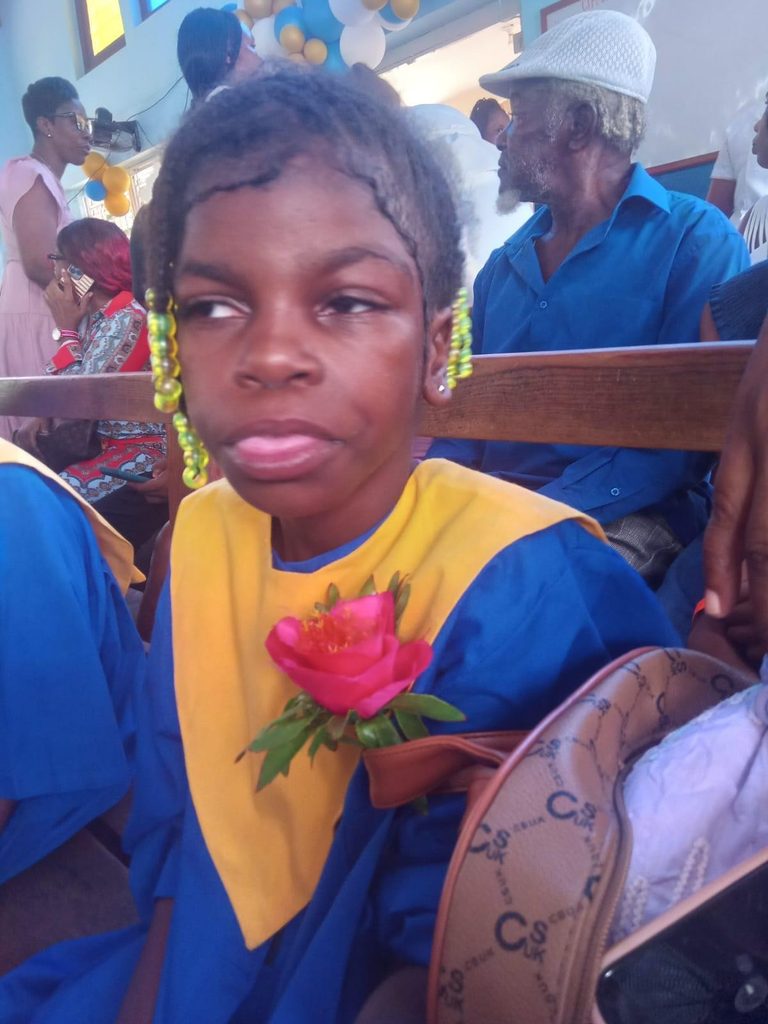
One such mother is Yvonne Taylor, whose nine-year-old daughter Micheal-Ann Rodney is non-verbal and has been unable to secure a place at the School of Hope because administrators say the school is full to capacity.
A single mother, Taylor earns what she can by collecting plastic bottles. When the rain comes, even that meager livelihood is completely taken from her. Because her daughter requires full-time, constant care and there is no one else to watch her, Taylor cannot leave the house to seek regular employment.
“It is hard for me,” Taylor shared. “Really rough and hard when not working. I have to teach her. If I don’t do it, nobody will do it.”
Without textbooks or a school uniform, Taylor turns to educational cartoons in an effort to keep her daughter learning. Her concern is deeply rooted in the child’s future. Having left school herself without graduating with subjects, Taylor is determined to save her daughter from the same fate.
“I don’t want her to come out and be like me,” Taylor said. “I want her to have her own life. If something happens to her, she can’t help herself. I love her, and I want to give her what I was denied.”
According to Nunes, Taylor’s case is far from exceptional. Caring for a child with special needs, including conditions like autism and Down syndrome, is a grueling, full-time job.
“You cannot go there to say you’re looking for a nine-to-five. It’s impossible,” Nunes explained.
Families face a compounding financial strain from the high cost of medicines, special food, diapers, and other daily necessities. Nunes noted that when a doctor writes a prescription containing several items, public dispensaries may supply some basic medicines for free. However, the remaining medicines, which are often the highly expensive, critical drugs that the child’s condition directly depends on, must be purchased out-of-pocket.
“If the child don’t get that, they get worse,” Nunes warned. “Things get out of hand.”
Desperate for an income, some parents try to find work as “shadows” – specialized assistants who support children with disabilities within school classrooms. However, the bureaucratic requirements to get hired are themselves costly and restrictive. Applicants must provide expensive police records, medical examinations, references, and formal qualifications.
Nunes questioned whether the government should give greater consideration to people who are highly capable of caring for children but lack formal certificates. “If I have gone through all of that and I can read and write, give me an exam, give me a test, give me something,” she urged. “How you turn me down because I just don’t have that?”
URGENT INTERVENTION NEEDED!
As the backlog grows, parents are demanding structural intervention to assist special needs children to get into schools.
“We said inclusion, but we’re not seeing it, we’re not feeling it,” declared Karen Nunes who has a child with disability . “Disability life matters.”
Education, Skills, Youth and Information Minister Dr. Dana Morris Dixon, has issued major directives targeting institutional barriers.
Addressing the immediate gatekeeping of school places, Minister Morris Dixon announced at a media event on September 3, a strict policy warning school boards across Jamaica that no child can be denied access or registration in public schools due to a disability or because they are stuck on a multi-year waiting list for a psycho-educational assessment. The Ministry emphasized that blocking enrollment over pending paperwork or special needs is a direct violation of the Child Care and Protection Act.
To address the severe lack of classrooms and infrastructure highlighted by advocates, the Ministry is transitioning to a new need-based funding model. This financial formula specifically shifts resources toward early childhood, primary, and special education institutions. By explicitly recognizing that special needs classrooms face significantly higher operational costs, the model aims to fund schools based on the intensity of resources required per child, rather than standard enrollment numbers.
Furthermore, the Ministry is utilizing newly released data from the Planning Institute of Jamaica (PIOJ) to fast-track inclusive infrastructure modifications. To ease the burden on specialized schools like the School of Hope, long-term legislative reforms via the Jamaica Teaching Council Bill will mandate that all public school teachers receive special education training. This will ensure that traditional classrooms are equipped to safely and effectively integrate children who are currently being turned away.
While the Ministry’s new mandates promise a systemic overhaul, parents like Yvonne Taylor who has a child with disability, and Karen Nunes emphasize that for the children currently sitting at home losing vital developmental ground, these resources cannot arrive fast enough.