The Ministry of Education, Skills, Youth and Information is seeking further feedback from school administrators, church representatives, parents and other stakeholders on revised guidelines governing devotional exercises in public educational institutions.
In a circular dated October 21, 2026, Acting Chief Education Officer Terry Ann Thomas invited secondary school principals to consult with their Boards of Management, staff, Parent-Teacher Associations, student representatives and church sponsors, where applicable, before submitting consolidated recommendations by November 6.
The revised guidelines seek to preserve Jamaica’s longstanding tradition of Christian devotions in schools while ensuring that religious observances respect constitutional rights, parental choices and the welfare of students.
The latest revisions follow concerns previously raised by school administrators, churches, religious organisations and other education stakeholders about the proposed arrangements. Among the key changes are clearer provisions on parental exemptions, the autonomy of church-owned and church-sponsored schools, and the Ministry’s role in overseeing devotional activities.
The guidelines also introduce administrative procedures for visiting clergy and devotional leaders, including an application form, a sample devotional schedule and a code of conduct.
Under the proposed arrangements, principals or Boards of Management would review
applications from visiting religious leaders, considering the suitability of their presentations, students’ ages, the school’s traditions and requirements for supervision.
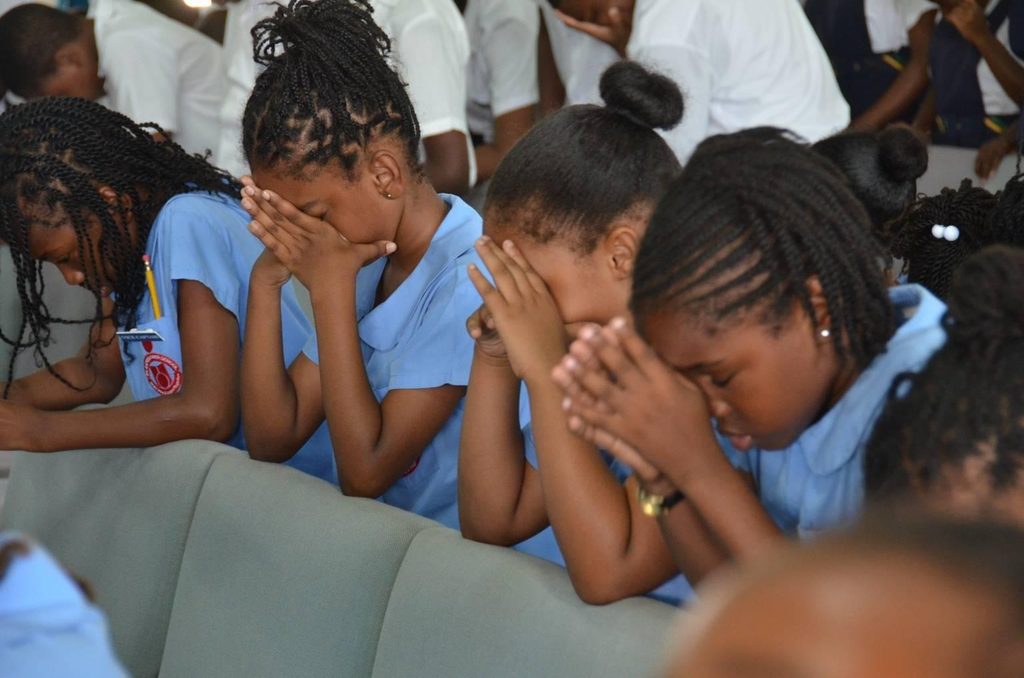
Devotional activities could include prayer, scripture reading, singing, testimonies and messages of spiritual encouragement. However, students should not be pressured to participate in religious expressions or physical gestures, such as joining hands.
The guidelines also reaffirm parents’ right under Section 18 of the Education Act to request that their children be excused from religious observances. Schools would be required to make arrangements for exempted students to remain supervised and participate in appropriate alternative activities without being disadvantaged.
The review comes against the backdrop of public debate following an incident at Oberlin High School in St Andrew in October 2022, when scores of students reportedly became overwhelmed during a morning devotional exercise.
The incident occurred on October 26 after a teacher leading worship reportedly began praying for students following what she described as a message from God. The episode escalated, with some students shaking, screaming, and falling to the ground. The school dismissed classes early as staff attempted to restore calm, while some affected students received assistance from the school nurse.
Then Education and Youth Minister Fayval Williams announced that the Ministry had launched an investigation to help determine appropriate protocols for school devotions. Williams maintained that while the Government encouraged devotion in schools, administrators had a responsibility to exercise caution regarding the content of religious activities and their potential impact on students.
Days after the incident, she recommended that Oberlin temporarily suspend mass devotions and hold simpler exercises in classrooms instead. She argued that large gatherings could be difficult to control and that students needed time to process what had happened. The proposed regulation of devotions, however, raised concerns among church leaders and other stakeholders about the Government’s involvement in religious practices. Some religious representatives cautioned against excessive interference in worship, arguing that the Ministry needed to respect the historical contribution of churches to Jamaica’s education system. Calls
were also made for consultation before formal protocols were introduced.
The Ministry subsequently published guidelines for devotions in schools in August 2023, establishing a framework for the organisation, management and oversight of devotional exercises.
The revised October 2026 document explicitly recognises Christianity’s historical influence on Jamaican education and affirms the right of church-owned and church-sponsored institutions to maintain devotional practices consistent with their denominational traditions, subject to Jamaican law.
It also clarifies that the guidelines are intended to provide administrative direction rather than regulate religious doctrine, prescribe theological content or prohibit legitimate expressions of worship.
The Ministry says monitoring will focus on operational matters, including student supervision, exemption arrangements and the approval of visiting devotional leaders, rather than the theological content of religious activities.
Schools are being asked to assess whether the proposed arrangements are practical, preserve established devotional traditions and adequately protect the rights of students and parents.
The Ministry says the consultation is intended to strengthen the guidelines and support their consistent implementation across public educational institutions.