Members of the religious community believes the proposed Non-Profit Organisations (NPO) Act is a calculated mechanism for the state to gain a backdoor key to tithes, offerings and other church resources.
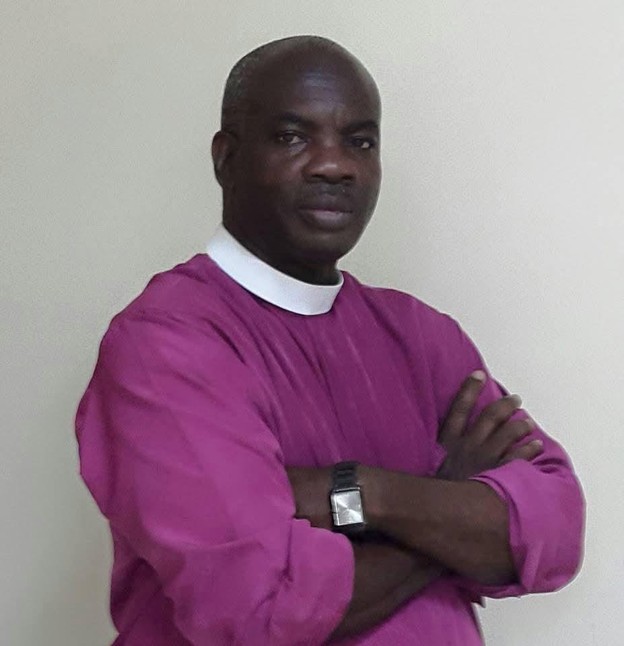
Among those who share this view is President of the Jamaica Evangelical Alliance, Bishop Dr. Alvin Bailey. Speaking on behalf of the Jamaica Umbrella Group of Churches (JUGC) Public Witness Committee, the senior clergyman contends that the legislative push hides an ulterior motive driven by Jamaica’s current economic climate.
According to Bishop Dr. Bailey, there has long been a political narrative that the church owns more land and hoards more money than it can properly manage.
Bishop Dr. Bailey pointed to recent government interventions where lawmakers created statutory loopholes to extract funds from non-government bodies, including a recent private insurance firm.
“We do not want the same to happen to us,” Bishop Dr. Bailey warned. “We believe that we’re operating in our country, within the laws of the country, and we should be respected as such, as compliant. There should be no additional law, rules, or regulation that makes additional claim because they want access to our building, access to our money, access to our people, access to our resources.”
Leadership across Jamaica’s religious landscape has launched a fierce pushback against the government’s proposed NPO Act which is expected to be tabled in parliament this month. The church leaders feel the legislation is an aggressive overreach that threatens church autonomy and targets sacred finances.
Bishop Dr. Bailey did not mince words regarding what the religious community widely refers to as the “mandatory registration of churches.”
At the core of the church’s outrage is how the new law plans to monitor and manage religious funds. Under definitions set by the international Financial Action Task Force (FATF), any entity that raises and disburses funds for charitable or religious good deeds is classified as an NPO and will be heavily regulated.
Bishop Dr. Bailey argued that treating the church’s financial operations like a standard commercial institution is a fundamental violation of religious freedom.
“We see our tithes and offering as a sacrament, as a part of our worship,” Bishop Dr. Bailey stated. “For it to be treated in a way that you would treat the finances, the money, and any other kind of operation or instrument in any other institution is a kind of desecration… and really an ungodly imposition and disregard and disrespect for the church in society.”
A major flashpoint for church leaders is the total lack of true state consultation.
The question was raised at a recent sensitization meeting as to why religious groups were excluded from the drafting process. The session was organised by the Department Of Cooperative And Friendly Societies (DCFS) in collaboration with other government agencies.
Officials claimed that the change in law is a push to be internationally compliant with FATF so no church leaders would have been factored into the development of the bill.
Instead of collaborative discussions, the government has subjected religious leaders to “sensitization sessions” a move the JUGC views as a forced dictation rather than a partnership.
Following a recent newspaper article by the Freedom Come Rain Newspaper outlining some of the concerns from church leaders, the DCFS announced its intention to meet with faith-based organisation this week. The organisation stated that this was in response to “recent social media activities and newspaper articles that have purportedly disseminated misinformation.”
Meanwhile, Bishop Dr. Bailey has dismissed the government’s absolute defense of international compliance as an excuse, noting that sovereign nations routinely navigate or opt out of rigid international guidelines without collapsing their independence. He argued that the proposed Act is far too forceful and absolute to be justified by global pressure alone.
The pushback against the proposed Act, comes at a time of rising anxiety across all denominations. Following a massive summit of over 300 church representatives weeks ago, Bishop Dr. Bailey confirmed that groups like the Jamaica Pentecostal Union continue to flood his office with calls regarding the heavy bureaucratic burdens and rumored registration fees that the act will enforce.
The irony, the JUGC notes, is that Jamaican churches are already legally bound to the state, operating strictly under specific Acts of Parliament or the Companies Act of Jamaica.
As the sensitization process continues, the JUGC is demanding that the government pull the church out of the general NPO bundle. Bishop Dr. Bailey stated that if the state intends to regulate religious groups, those rules must be considered exclusively. Moving forward, the church demands a clear justification for every proposed rule and a transparent assessment of whether the law’s true implication is state control over the pulpit.