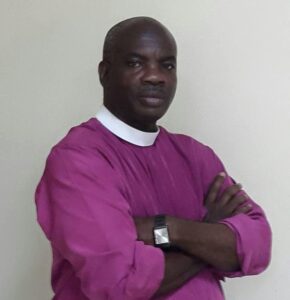
A case of musical chairs is how Bishop Dr Alvin Bailey has described the dramatic increase in the number of churches locally against the backdrop of a continued decline in the Christian population.
The 2022 census is yet to be released, but the 2011 Population and Housing Census recorded 1,812,311 people, or 67.54 per cent of the population, identifying with Christianity. At the same time, 572,005 people, or 21.30 per cent, reported having no religion.
The figures represented a significant change from earlier decades. In 1982, approximately 11 per cent of Jamaicans were recorded as having no religion, while the corresponding figure rose sharply to 19.8 per cent in 1991.
While the Christian population remained numerically large, it underwent significant internal changes, with some traditional denominations losing ground while Pentecostal, evangelical and independent churches expanded.
Bishop Dr Bailey questioned whether the apparent decline in Christianity over the last few census releases should be interpreted simply as Jamaicans abandoning the faith.
“When you look at the number of churches that there were at that time and the number of churches that there are now, [there are] many, many more churches,” Bishop Dr Bailey said.
He cited the growth of his own Portmore Holiness Christian Church as an example, saying the congregation is now about three times its former size.
“Churches are growing. Churches are springing up,” he insisted.
That growth, the senior clergyman suggested, raises questions about what religious statistics are actually being measured.
“It begs the question… what is the cause of the statistic?” Bishop Dr Bailey said, questioning whether the numbers represent a genuine decline in Christian belief or a movement of people between denominations.
His description of the phenomenon was blunt: “musical chairs of those who are unconverted and unbelievers.”
The Seventh-day Adventist Church remains one of the most prominent and influential denominations in Jamaica. The continued expansion of the Central Jamaica Conference (CJC) in parishes like Clarendon and St Catherine earlier this year has resulted in an additional 8,884 members and now brings the total number of churches in that Conference to 212. There are five local conferences under the Jamaica Union Conference of Seventh-day Adventists.
The New Testament Church of God in Jamaica, which celebrated 100 years in 2025, saw an increase in the number of churches from 53 organised branches across Clarendon, St Ann, Manchester, and St. Elizabeth and Trelawny in 1935 to over 360 churches currently across the island. Several other denominations have reported a massive increase in churches over the last 50 years.
Jamaica’s 2022 census recorded a population of 2,774,538, an increase of 2.8 per cent over the 2011 census.
The release and analysis of the census’s cultural and religious data is expected to provide a clearer picture of how Jamaicans’ religious identities have evolved over the past decade.
Any suggestion that the “No Religion” category has increased since 2011 should, however, be treated as a projection until the relevant official 2022 religious-affiliation figures are formally released by the Statistical Institute of Jamaica (STATIN).
While the total number of Christians worldwide grew from 2.1 billion to 2.3 billion between 2010 and 2020, their share of the global population decreased from 31 per cent to 29 per cent. Other religious groups, such as Islam, have witnessed a much faster growth rate in the last few years.
SENIOR PASTOR UNFAZED BY RISE IN ‘NO RELIGION’ CLAIMS
Even if the number of Jamaicans claiming ‘No Religion’ increases, Bishop Dr. Alvin Bailey says this should not be viewed as a crisis for the Christian church.
He argued that those who turn away from Christianity remains the church’s responsibility to evangelise.
Speaking against the backdrop of Jamaica’s changing religious landscape, he said Christians should not interpret the shift as evidence that people who were once committed believers are necessarily “backsliding”.
“It’s not a concern of mine,” said Bishop Dr. Bailey, noting that the Bible itself speaks of people in the last days becoming increasingly focused on themselves and worldly pleasures.
The Chairman of Jamaica CAUSE (Churches Action Uniting Society for Emancipation) argued that for many Jamaicans, moving away from Christianity does not necessarily represent a rejection of a previous conversion experience or future conversion prospect.
“Turning away from Christianity is not turning away from conversion,” Bishop Dr. Bailey said. Rather, he suggested, it may reflect people moving away from the beliefs of a particular denomination or faith altogether and developing an identity outside Christianity.
For the senior clergyman, the distinction does not lessen the church’s responsibility. He said people who identify as non-Christian remain the focus of what he described as the church’s “redemptive responsibility” and “missional mandate”.
“We have a job to, with the gospel of Jesus Christ, reach them for Christ,” he said.
Bailey said the issue becomes even more personal when those who identify as non-Christian are family members.
“When they are our brothers and sisters and fathers and husbands and wives, when they are related to us, there’s a different kind of passion that is brought to that,” he said.
He also raised what he sees as a striking contradiction in Jamaican society: people who may have little or no active connection to Christianity often return to the church at the end of their lives for Christian funerals.
Bailey estimated that about 90 per cent of such Jamaicans ultimately find themselves in a church at death, where a pastor conducts the funeral service and presents Christian teachings about death, resurrection and salvation.
He said those occasions also provide an opportunity for the church to evangelise.
The comments come as Jamaica continues to wrestle with changes in religious affiliation and questions about whether the country’s historically dominant Christian identity is weakening.
Jamaica has long been regarded as a deeply Christian society, with churches playing a prominent role in communities, education, politics and social life.
But census data over the decades show that religious affiliation has become increasingly diverse.
If this trend continues, the findings of the yet to be released 2022 census could intensify an already growing conversation among churches, sociologists and other religious bodies about the future of Christianity in Jamaica.
For Bishop Dr. Bailey, however, the response should not be panic.
Instead, he believes the church should see Jamaicans who identify as non-Christian as people still to be reached.
And while Jamaica’s religious landscape may be changing, Bishop Dr. Bailey’s position is that the church’s mission remains unchanged: to take the Christian message to those who no longer identify with it.