
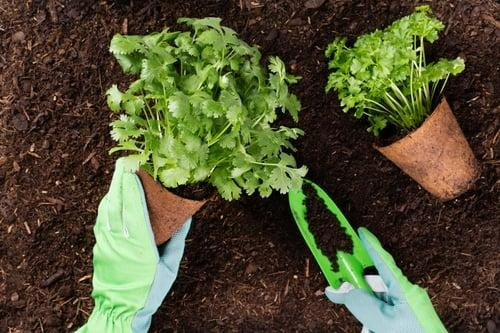
Cilantro, a beautiful, leafy herb is used in several cuisines and is easy to grow in the home garden. It’s a cool-weather plant, but it’s also nose-to-tail edible (so to speak): leaves, stems, and seeds are all edible.
To successfully grow cilantro in Jamaica’s warm tropical climate, you must protect the cool-weather herb from intense heat and afternoon shade to prevent early bolting (flowering).
TO PLANT:
Prior to planting the seeds, you must prepare them so they will be able to germinate. Cilantro seeds are actually two seeds encased in a husk. Crush the husk gently by holding the two seeds together and then soak the seeds in water for 24 to 48 hours. Remove the seeds from the water and allow them to dry prior to planting. Cilantro can be started indoors or outdoors. Plant the seeds 1/4 inch deep. To transplant a cilantro plant that has been started indoors, dig holes 3 to 4 inches apart in the garden. After transplanting, water the cilantro thoroughly.
TO GROW:
Once cilantro reaches 2 inches tall, thin the plants to 3 to 4 inches apart. Cilantro grows best in crowded conditions because the plant’s leaves will shade the roots and prevent the plant from bolting. Cilantro likes full sun, but in hotter climates, partial shade will be tolerated as the plant bolts in warm weather. Once the cilantro is a couple of inches tall, begin watering regularly. As soon as cilantro develops flower heads, cut them off to redirect energy to the leaves for a larger harvest.
Due to cilantro’s strong aroma, it rarely has issues with pests and is even considered an insect repellent. Leaf spot can become a problem by creating yellow leaves, but this can be prevented by making sure cilantro is in well-drained soil and by not over watering the plant.
TO HARVEST:
Pruning cilantro and harvesting it frequently delays bolting, but the plant is short-lived and will bolt. To ensure a cilantro harvest for a longer season, plant seeds every six weeks. Cilantro usually reseeds itself, so let it go to seed or collect the coriander to use in cooking. Cilantro is ready to harvest within 45 days. Cut the upper new leaves to harvest. Unlike other herbs, cilantro is rarely frozen and used later in cooking, as it loses almost all of its scent and flavour if not fresh.
WHAT CILANTRO CRAVES:
Prior to planting cilantro, prepare the soil by amending it with compost to a depth of 18 inches. After amending the soil, rake it smooth.
During its first few weeks of life, cilantro grows well if a water-soluble fertiliser is applied. Fertilise with a water-soluble fertiliser every other time you water the plant. Once flowers appear and the plant begins to go to seed, stop fertilising. Cilantro seeds are known as coriander, a spice that’s ground and used in a variety of recipes, from curries to baked goods.
HEALTH BENEFITS
Like many culinary herbs, cilantro has been used medicinally since ancient times. Modern research methods are finding support for some of the health claims attributed to this plant.
Some health benefits of cilantro may include:
BRAIN HEALTH
Although further research is still needed, several studies have connected eating cilantro with reduced symptoms of cognitive diseases like Alzheimer’s and Parkinson’s disease.
In one study, cilantro extract reduced seizure attacks and prevented nerve-cell damage in rats. In another, when fresh cilantro leaves were added to the diets of laboratory mice, scientists saw improvements in their memory.
REDUCED ANXIETY
In animal studies, extracts from the cilantro plant have proven almost as effective as medication at reducing anxiety symptoms. Studies with human subjects are still needed.
BLOOD SUGAR MANAGEMENT
Cilantro is so well-known for its ability to lower blood sugar that people with low blood sugar or those taking diabetes medications are warned to be careful with the herb.
In animal studies, coriander seeds reduced blood sugar by stimulating an enzyme that removes sugar from the blood.
In another study, cilantro extract decreased blood sugar in rats with obesity and high blood sugar. The effects were similar to the blood sugar medication glibenclamide.
PREVENT FOODBORNE ILLNESSES
The cilantro plant contains dodecenal, an antimicrobial compound that may help protect your body against infections and illnesses caused by tainted food. The compound is effective against Salmonella, a microbe that can cause life-threatening food poisoning.
Another study found that compounds in cilantro are effective against several bacteria, including those that cause foodborne illnesses and hospital-acquired infections.