
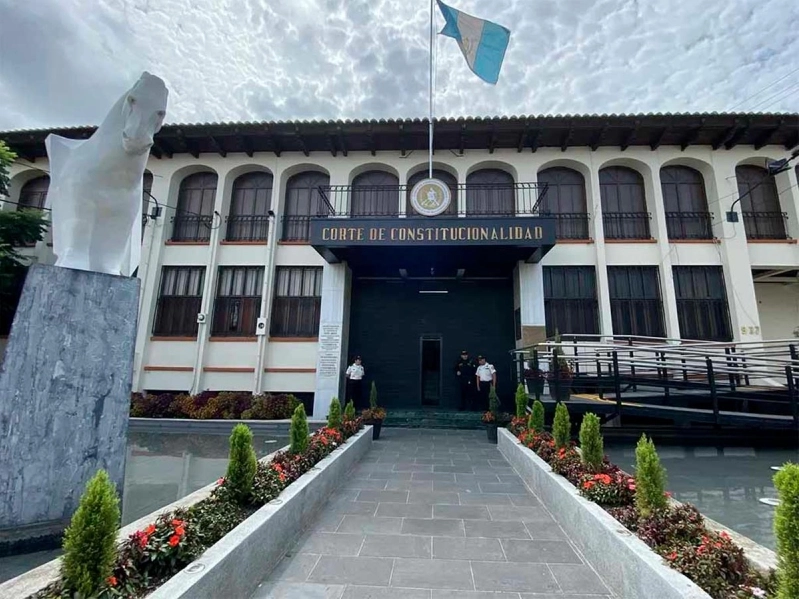
Evangelical leaders in Guatemala are rejecting a legal petition by the LGBT community to change the state’s definition of marriage.
In an open letter, the Evangelical Commission of Guatemala (COEGUA) and the Evangelical Forum of Guatemala (FE502) expressed its opposition to challenges raised against Article 78 of the Civil Code. This law defines marriage as the legal union between one man and one woman.
The request, which was supported by several advocacy organizations, argues that limiting marriage to heterosexual couples is discriminatory.
The Lambda Association, which is among the petitioners, argued before the Constitutional Court that the current law discriminates on the basis of sexual orientation by denying same-sex couples access to marriage. According to The Associated Press, the community is also arguing that the provision is unconstitutional because it excludes same-sex couples from marrying.
Meanwhile, The Evangelical organizations counter those, emphasizing in their letter that they reject all forms of hatred and discrimination because every person is created in the image of God, however, their commitment does not require them to do away with good biblical principles.
The letter states, “We believe that love for people should never lead us to renounce the truth revealed in the Holy Scriptures.”
The statement further argues that the state was not the originator of marriage but recognizes and protects it.
From the beginning, the Bible establishes the divine design for marriage: “Male and female He created them” (Genesis 1:27), and our Lord Jesus Christ reaffirmed this by declaring: “What God has joined together, let no man separate” (Matthew 19:6). Marriage did not originate from human decision; it is an institution established by God for the well-being of the family and society.
The organizations also sought to debunk the claims of unconstitutionality by referring to Guatemala’s legal framework.
COEGUA and FE502 argue that Article 78 of the Civil Code implements Article 47 of the Constitution of the Republic of Guatemala, which ensures the protection of the family and mandates that the State promote the institution based on the legal foundation of marriage. By redefining marriage through a constitutional ruling rather than going through the legislative process, would undermine Guatemala’s legal framework..
“To defend this provision is to defend respect for the Constitution, legal certainty, and the rule of law…We respectfully call for this important debate to be conducted with responsibility, a sound legal basis, and mutual respect. We trust that the judicial institutions will rule in accordance with the Constitution and the laws of the Republic, preserving institutional balance and the common good,” they said.
So far the Constitutional Court has not announced when it will consider the petition.