
The recent demolition of dwellings at Cooper’s Pen in Trelawny brings to the fore and amplifies the urgent issue of landlessness in Jamaica.
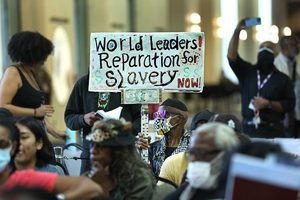
The Government of Jamaica is well aware that the newly emancipated people in 1838 were not afforded land or property rights and that a large segment of the population continues to be haunted by this major injustice.
On this score, the manner in which the demolition was carried out points to the need for established protocols that prioritize safeguards against violation of human dignity while ensuring enforcement of the law.
Until the matter of landlessness is adequately addressed, the Jamaican courts are likely to continue issuing eviction orders to large numbers of people. But it is counterproductive for one arm of the State to be solving the problem of property ownership, while at the same time contributing to issues of social insecurity and public health.
Addressing landlessness is achievable, if partisan politics is put aside. The ACCM calls on the Minister of Justice and the Minister with responsibility for Social Security to collaboratively establish the protocols for executing court-ordered eviction, which involves families and households.
Regarding the greater issue of landlessness by the masses, ACCM calls on the Government of Jamaica to proactively intervene in all the known cases of illegal settlements and apply the appropriate policy solutions to acquire the properties for the common good. Of course, the rights of private property owners must be respected, and they are not to be penalized or victimized in the process.
A mechanism must be put in place to deter political partisanship from railroading the resolution of illegal settlements. In this regard, ACCM recommends the formation of parish or county-based land committees including the church and civil society organizations.
Funds from the National Housing Trust (NHT) could also be used to purchase such properties, with lease or rent-to-own agreements established, where beneficiaries are required to pay back over time.
The ACCM believes this massively unjust outcome of the Transatlantic Slave Trade must be urgently and firmly addressed for the benefit of all concerned and the sake of good governance.