Dear Editor,
Transparency is the quality of being transparent, making it possible to see through something. Transparency allows honesty, integrity and trust to be a central pillar of any society. It is the foundation that good governance is built on, and a lack thereof is the cemetery where good governance goes to die.
The Jamaican government has existed as an independent nation since August 6, 1962, nearly 64 years. The country has experienced many different eras: times of hardship, times of plenty, and times of transition.
I think many would agree that Jamaica is in a period of transition, a time when we are going to decide how the next couple of decades will transform our nation—for better or worse. As a nation, we cannot allow our government to sacrifice transparency on the altar of authoritarianism. Great power comes with great responsibility, and Jamaicans nationwide have a civic duty to ensure that the government’s power is checked and balanced.
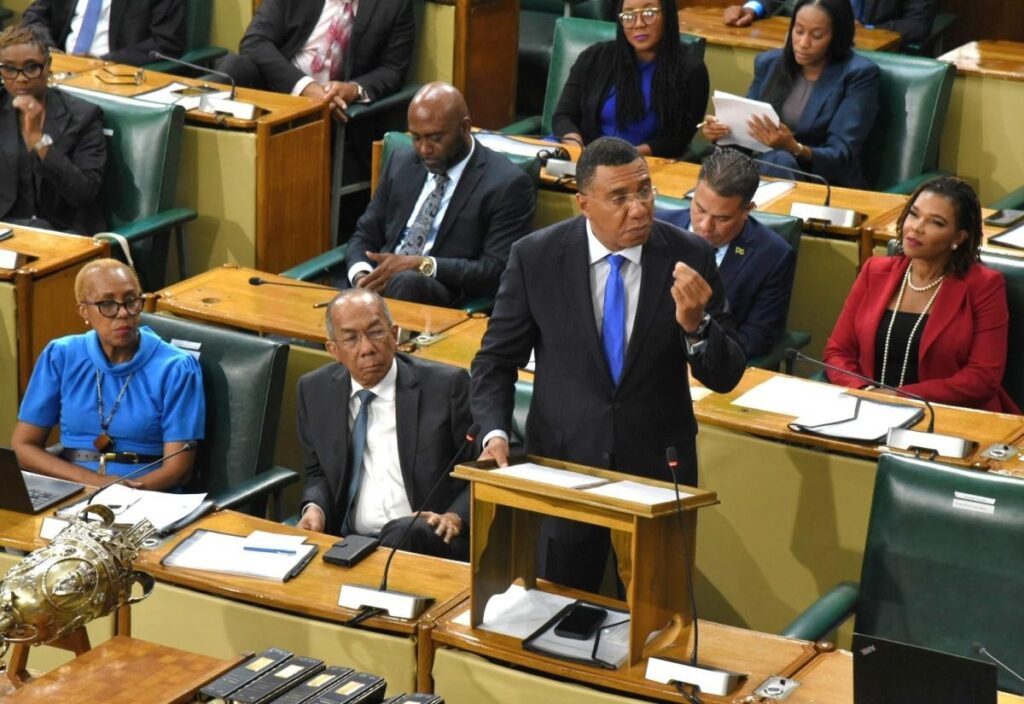
The recent controversy surrounding the Jamaican government’s decision to accept undocumented migrants deported from the United States in the third-country nationals memorandum of understanding, is one such moment where our civic duty becomes critical. Transparency typically requires that a government brings issues of national importance, like international agreements and MOUs, to the public’s attention. Note the distinction between transparency and appropriate legal actions. Legally, the government may not be required to reveal all agreements or MOUs agreed upon with foreign governments. Legally, there may be autonomy and discretion provided to a government to make decisions such as the one in question. However, what is legally permissible is not always appropriate or morally correct.
The extreme disappointment expressed by Ambassador Audrey Marks over her words being misrepresented, followed by the condemnation of social media as “propaganda” by Desmond McKenzie, could have easily been avoided by transparency from the start. McKenzie remarked regarding social media: “… something that is designed to advance information and technology has now become a weapon of mass destruction, propaganda and lies.” However, the speculation, conspiracy theories, and distrust circulating on social media did not arise in a vacuum. At a time when many nations around the world are emphasising transparency and corruption mitigation, the Jamaican government lacks the transparency the public expects.
The people of Jamaica thrive when the government of Jamaica works in our best interest. Amongst the many ways the government can act in Jamaica’s best interest is to practise a consistent transparency policy.
Jamaica is frequently compared to Singapore, as the latter famously looked to Jamaica as a model of development. They both gained independence around the same time—Jamaica in 1962 and Singapore on August 7, 1965. Their paths soon began diverging markedly, though.
Today, according to figures from Transparency International, a non-governmental organisation that seeks to fight corruption, Singapore’s Corruption Perceptions Index (CPI) score was 84 in 2025, ranking 3rd out of 182 countries. Jamaica, on the other hand, had a score of 44 in 2025, ranking 73rd out of 182 countries.
While transparency scores aren’t absolute judgements, the numbers speak for themselves, without partisanship or bias—Jamaica needs more transparent governance to move forward, to build trust, reduce misinformation, and the “propaganda” our government ministers seem so troubled by. Transparency will not solve all of Jamaica’s problems, but it will build the foundation for better governance and lead to a clearer future for this country.
I am,
Ifeoluwa Alonge (a 17-year-old student)