President Donald Trump may have declared that Jamaica is a close United States ally, sharing a strong, longstanding diplomatic and economic friendship. However, as geopolitical tensions intensify across the region, Jamaica must face the fact that this partnership provides zero protection.
By now, every Jamaican should understand that US Secretary of State Senator Marco Rubio, who was handed his portfolio in January 2025, was not on a friendly meet-and-greet junket when he touched down on the island in March the same year. Rubio arrived armed with strategic demands and crystal-clear instructions.
Jamaica is divinely located in the western Caribbean. It is a global cultural force and the gateway for people, goods and services, including narcotics and other questionable matters, to enter the United States, Canada and Europe. When Jamaica bows, the Caribbean, parts of Africa and even sections of Europe respond. Rubio’s trip to Jamaica was serious business.
It is a well-known fact that countries, like the United States, engage with corrupt governments in smaller nations in their efforts to secure strategic assets, resources, and geopolitical alignment with minimal resistance. So the stakes were super high when Rubio entered bilateral talks with corrupt, compromised Jamaica.
Rubio entered the room aware that Prime Minister Dr Andrew Holness and the Integrity Commission were at odds over his statutory declarations. He knew that key members of Holness’ inner circle had to step aside from his previous administration for corruption. Rubio was also aware that Jamaican politicians value their visas above other people’s lives. So the threat of exposure and visa revocation were weapons of last resort lurking in the shadows of nods and smiles like loaded scud missiles. Rubio held the handle and Holness the blade, as the men sat to talk.
Like a stacked domino game, Rubio had the winning hand and he was running the board. Holness held doubles and all his moves were blocked. He was seated at the table, but passed on every play. Rubio slammed hard. Jamaica has to do away with the Cuban medical mission, cut all ties with Venezuela, brace for batches of third-country deportees and reduce Chinese footprints engraved within the nation’s ports, roadways, retail, housing and communications sectors.
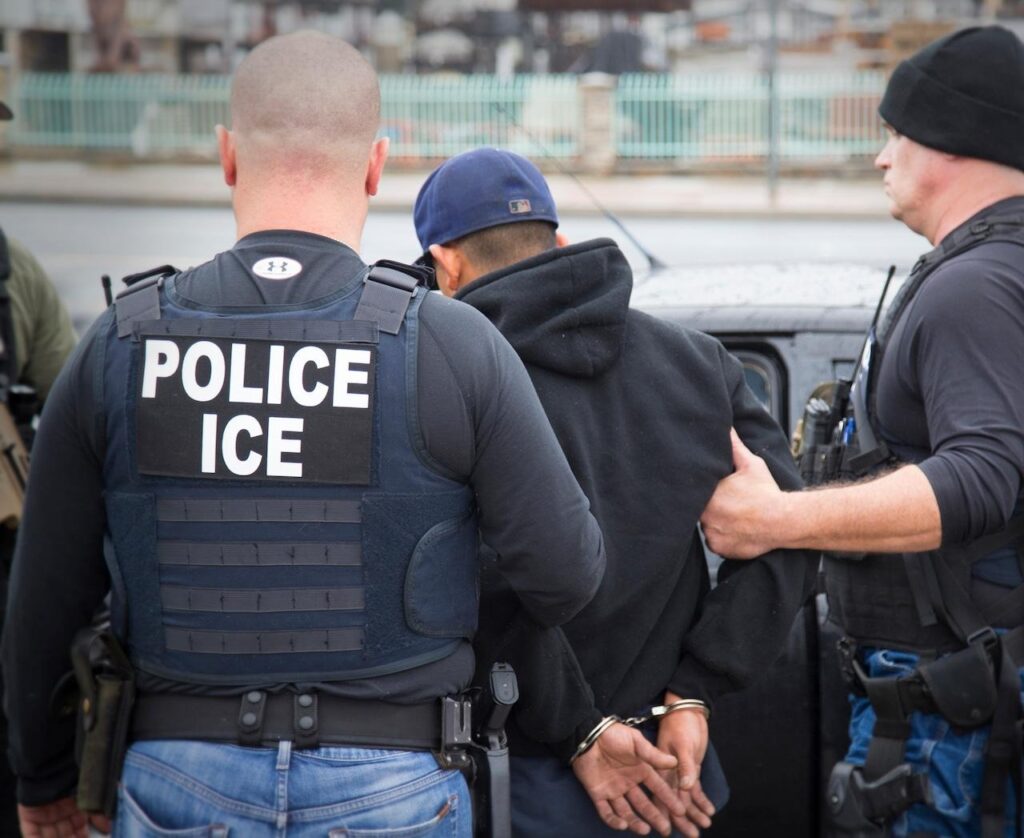
Bilateral talks are laced with non-negotiable items. One such item is third-country deportation as the Trump administration is determined to fulfil its election promise of ridding the United States of undesirable migrants. Persons who are facing deportation orders out of U.S. territory are rerouted to cooperating partner nations where they have no existing family connections, history, or linguistic ties.
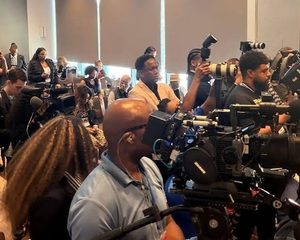
Rubio has defined these unwanted migrants as ‘despicable people’, who are dangerous individuals, including convicted criminals, rapists and pedophiles. With press cameras ablaze he told the world that the Trump administration is “not apologetic” about searching the globe for partner countries to admit US most despicable immigrants.
Based on Rubio’s definition of despicable people, Jamaicans know that the Holness government had been very clear about its position on the particular group. Despicable people in Jamaica must prepare to face the judge or to meet their maker. Over 700 young men, who the state considered despicable, have been sent to meet their maker by the security forces on special operations over the past three years.
Haitians, including women, children and babies on the breast, seeking a better life away from their gang-infested country are also considered despicable. These desperate neighbours are repatriated to their country on arrival to our shores, having braved treacherous waters in dinghies and canoes. There is no room for them on the island.
Since the passage of Hurricane Melissa, a number of families in the western part of the island are still without help, despite the government receiving and hoarding donations to assist them. These people would be numbered among the ‘despicable’ who are unworthy of timely recovery or government consideration.
The government wants the nation to believe that the despicable persons that are being rounded up in the United States to be dispatched to Jamaica in batches of 25 every two weeks are not like young men sent to meet their maker, nor like the Haitians sent back to face warring gangs who kill on a whim. They are also not like the many families that are still waiting for help since Melissa. Perhaps, the Jamaican government believes that anything or anyone coming from America must be of better stock.
US demands for Jamaica to cut ties with Venezuela would also not be an issue. The island’s oil and energy relations with Venezuela had transitioned from close, strategic cooperation under the PetroCaribe agreement to total operational cessation. So when the United States started to penalise international companies and foreign governments that conducted business with Venezuela, Jamaica was already out of the equation.
But raw nerves were hit at the mention of China. Since the Cold War, the United States has been itching under its collar about the advance of China across the region. Chinese operatives control the major port, construction, communication, road development and retail sectors in Jamaica and the other CARICOM nations.
At her Senate Foreign Relations Committee confirmation hearing on June 18, 2026, Kari Lake, who was nominated by President Donald Trump to serve as the United States Ambassador to Jamaica, strongly vowed to counter China’s expanding economic and strategic footprint in Jamaica.
Bilateral talks would have been tough, and Holness must have been torn between his shattered Brogad ego, his pyrrhic third-term victory and his glaring vulnerabilities.
Feathers were ruffled and plucked and wings clipped. Guarantees Jamaica once enjoyed with the United States are gone. The government is powerless in the current geopolitical posturing. The United States has drawn the line. Will Jamaica dare to cross it?