Christian organizations are calling on government officials in Mozambique to fulfill promises to strengthen freedom of religion or belief. The Evangelical Association of Mozambique along with The World Evangelical Alliance, and the World Council of Churches made the appeal at the recently held session of the United Nations Human Rights Council in Geneva.
During the adoption of Mozambique’s outcome under the Universal Periodic Review (UPR) process, Janet Epp Buckingham delivered a joint oral statement on the organization’s behalf.
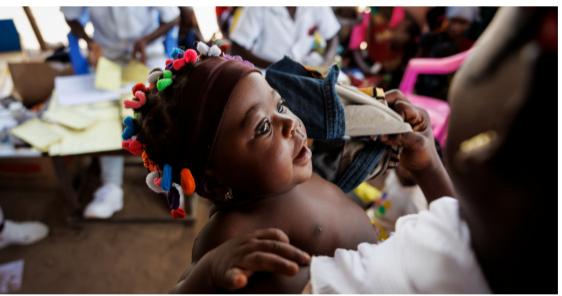
The call comes as scores of citizens in the northern provinces of Mozambique continue to be displaced by armed insurgency. The United Nations has revealed that in their 2026 assessments, more than 1 million people had been affected by conflict in northern Mozambique. In addition, UNICEF reported that about 412,000 people remained displaced in 20 northern districts.
“Armed conflict in the north is intensifying, with 63 per cent more attacks in 2025 compared with 2024, making this year the most violent since 2022,” the reports said, “Armed non-state actors have expanded their geographical reach and are employing more sophisticated tactics, including kidnapping and the use of improvised explosive devices. Civilians are experiencing the worst of the violence, with grave violations against children, displacement and destruction of essential infrastructure widespread.”
During the session, the Christian groups welcomed the government’s pledge to cooperate with the Human Rights Council and commitments to implement measures addressing violent extremism, humanitarian assistance, religious freedom and conflict-related sexual violence. They also welcomed Mozambique’s support for measures intended to prevent and respond to violent extremism and radicalization.
In addition they welcomed efforts by the government of Mozambique to protect religious freedom.They include the withdrawal of a draft law on religious freedom. There have also been efforts to align legislation governing religious communities with Article 18 of the International Covenant on Civil and Political Rights and Article 54 of Mozambique’s Constitution. Among recommendations for governments was humanitarian assistance for internally displaced people remaining a priority, and the implementation of its pledges to consult with affected communities, religious organizations and civil society groups.
They also said that it would be important to develop a comprehensive national strategy, aligned with the U.N. Global Counter-Terrorism Strategy and the Plan of Action to Prevent Violent Extremism as it would aid in protecting Mozambicans and strengthen accountability.
It has been 9 years since this armed rebellion first emerged in Northern Mozambique with Cabo Delgado Province at the core of it violence core.
Documentation from The Human Rights Council also report that the conflict in Cabo Delgado includes serious human rights and humanitarian-law violations, including attacks on civilians, abductions, forced recruitment of children and sexual violence.