Pastor Leslie Joseph ‘Joe’ Buckland has described as “sad” the government’s decision to require persons seeking assistance in the aftermath of Hurricane Melissa to register under the National Identification System (NIDS), warning that the measure could exploit the plight of vulnerable Jamaicans to advance the controversial identification scheme.
Pastor Buckland’s criticism comes amid continuing concerns over the government’s efforts to expand the use of NIDS, with opponents questioning whether Jamaicans should be required to surrender personal information to obtain assistance or access essential public services.
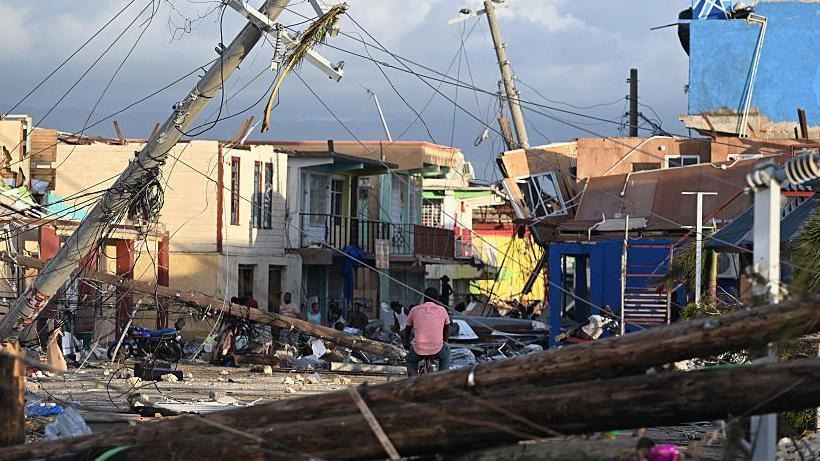
Speaking at a major press conference held a day ahead of the hurricane’s anniversary, Prime Minister Dr Andrew Holness outlined arrangements for the country’s response. Buckland took issue with the announcement that persons seeking recovery assistance would be required to register under NIDS.
“That’s like dropping a bomb,” the pastor declared, expressing dismay that the requirement had been introduced at a time when many Jamaicans were still seeking to rebuild their lives following the devastation.
The National Identification and Registration Act of 2021, which governs the National Identification System (NIDS), explicitly established NIDS as a voluntary tool for Jamaican citizens and ordinary residents. In 2019, the Constitutional Court struck down the first proposed NIDS Act on the basis that it breached the rights of Jamaicans to privacy as guaranteed by the Constitution.
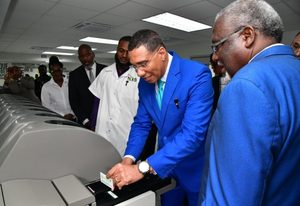
Under the hurricane recovery arrangement as described by Dr Holness, persons seeking assistance will now have to register with the national identification system before qualifying for the relevant benefits.
The Government’s stated rationale is to prevent individuals from presenting identification at different offices to obtain duplicate assistance. Buckland, however, argued that such a justification raised questions about the efficiency and integrity of the public administration.
He maintained that the authorities ought to address weaknesses in their own systems rather than impose what he regarded as an unnecessarily intrusive requirement upon persons already suffering from the consequences of the hurricane.
The pastor suggested that the inability of agencies to co-ordinate their records effectively should not become a burden for citizens seeking food, clothing and other necessities.
Buckland’s concerns reflect a wider unease among critics of NIDS, who have questioned whether the scheme could eventually become a prerequisite for accessing an increasing range of Government services.
The NIDS has received fierce pushback from the church community, as some feel it will be used eventually by a one-world government to control citizens globally. The government’s decision to appoint Bishop Conrad Pitkin, a churchman, as the chair of the National Identification and Registration Authority (NIRA), has not eased the general scepticism. NIRA is responsible for the layered rollout and management of NIDS.
Buckland suggested that the timing of Dr Holness’s announcement raised suspicions about the Government’s intentions.
Former UK Prime Minister Keir Starmer faced intense backlash following his announcement last September of plans to introduce new legislation that will require every adult in the UK to own a form of government-issued digital ID. The ID was to be mandatory for anyone hoping to work in the UK. A petition was established in response to the announcement and received almost three million signatures in just one week as people expressed privacy concerns. The country’s new Prime Minister Andy Burnham scrapped plans to introduce the digital ID when he took office earlier this year.